

Accepting the Messiah As He Is
Third Sunday in Advent :: Isaiah 35:1-10

This is the first of two sermon reflections for Sunday, December 13, 2025. In this essay I share my reflections about Brian Zahnd’s sermon, called Messiah as He Is, based on Isaiah 35:1-10.

artwork :: Two Crowns by Frank Dicksee, c. 1900
The Return of the Redeemed to Zion
35 The wilderness and the dry land shall be glad,
the desert shall rejoice and blossom;
like the crocus 2 it shall blossom abundantly,
and rejoice with joy and singing.
The glory of Lebanon shall be given to it,
the majesty of Carmel and Sharon.
They shall see the glory of the Lord,
the majesty of our God.
3 Strengthen the weak hands,
and make firm the feeble knees.
4 Say to those who are of a fearful heart,
“Be strong, fear not!
Behold, your God
will come with vengeance,
with the recompense of God.
He will come and save you.”
5 Then the eyes of the blind shall be opened,
and the ears of the deaf unstopped;
6 then shall the lame man leap like a hart,
and the tongue of the dumb sing for joy.
For waters shall break forth in the wilderness,
and streams in the desert;
7 the burning sand shall become a pool,
and the thirsty ground springs of water;
the haunt of jackals shall become a swamp,
the grass shall become reeds and rushes.
8 And a highway shall be there,
and it shall be called the Holy Way;
the unclean shall not pass over it,
and fools shall not err therein.
9 No lion shall be there,
nor shall any ravenous beast come up on it;
they shall not be found there,
but the redeemed shall walk there.
10 And the ransomed of the Lord shall return,
and come to Zion with singing;
everlasting joy shall be upon their heads;
they shall obtain joy and gladness,
and sorrow and sighing shall flee away.
Isaiah of Jerusalem prophesied during an ominous time for Judea. He prophesied from the death Uzziah to early in the reign of Manasseh. During Isaiah’s time, Judeans faced the Syro-Ephraimite crisis, the Assyrian menace under Sargon II and Sennacherib, Assyria’s failed siege of Jerusalem. Isaiah says, Fear not. G-d us with you. Let nothing disturb you, patience (in G-d) alone withstands things. It was a very long wait.
In the 15th year, during the reign of the emperor Tiberius, with Herod of Antipas as Tetrarch of Galilee, Phillip the Tetrarch ruling and Trachonitis, Pontius Pilate governing Judea, and Caiaphas as high priest of the Jews and president of the Sanhedrin — in the desert outside Jerusalem lived and preached a wild prophet, clad in strange dress made of camel hair, subsisting on diet of locusts and wild honey. Repent, change your mind and heart, get ready for what’s coming, the wild prophet preached. Who was this wild prophet? None other than the son of Zachariah and Elizabeth, John the Baptist, according to Luke, a cousin of Jesus.
When the officials find out about John the Baptist, they question him, as written in John 1: 19-23.
The Testimony of John the Baptist
19 And this is the testimony of John, when the Jews sent priests and Levites from Jerusalem to ask him, “Who are you?” 20 He confessed, he did not deny, but confessed, “I am not the Christ.” 21 And they asked him, “What then? Are you Eli′jah?” He said, “I am not.” “Are you the prophet?” And he answered, “No.” 22 They said to him then, “Who are you? Let us have an answer for those who sent us. What do you say about yourself?” 23 He said, “I am the voice of one crying in the wilderness, ‘Make straight the way of the Lord,’ as the prophet Isaiah said.”
“Are you the messiah? Are you the prophet foretold by Moses?”
No. Also no.
“Who are you then?”
I am the voice of one crying in the wilderness.
One day, John’s cousin from Nazareth came for baptism, and the Holy Spirit descended upon Him like a dove. By this sign, the Baptist knew Jesus was the One. From there, Jesus began His ministry, beginning in Canna, where he changed water to wine at a wedding.
John prepares the way for Jesus. John is advent, Jesus is Christmas.
The Baptist rebuked Herod for marrying his brother’s wife, Herodius. This gets him in trouble. The Baptist expected a revolution that never happens, he wonders what’s happening, he begins to doubt Jesus, as he languishes in prison. When’s the Messiah gonna do Messiah things? John the Baptist sends his disciples to ask Jesus are you the One? Jesus tells them to go tell what you’ve seen (curing the blind, healing the sick etc).
Matthew 11:2-6 :: Messengers from John the Baptist
2 Now when John heard in prison about the deeds of the Christ, he sent word by his disciples 3 and said to him, “Are you he who is to come, or shall we look for another?”[a] 4 And Jesus answered them, “Go and tell John what you hear and see: 5 the blind receive their sight and the lame walk, lepers are cleansed and the deaf hear, and the dead are raised up, and the poor have good news preached to them. 6 And blessed is he who takes no offense at me.”
“It’s very hard to take Messiah as He is, when you have your own expectations of what Messiah is supposed to do.” — Brian Zahnd
John wants Jesus to overthrow the imperial rulers in his Messiah revolution. John the Baptist wants a Messianic leader to wage a political revolution like Moses, Joshua, David, Judah Maccabee all did wage political revolutions. BUT … didnt Isaiah give the signs?
Isaiah 43:19 says, Behold, I do a new thing! Now it springs forth. Do you not perceive it? In Matthew 11:6 Jesus says, “And blessed is the one who is not offended by me.”
Jesus becomes a skandalon1, a stumbling block, to all those who cannot accept Him as He has come. The rock of salvation becomes a stumbling stone to those who take offense. John the Baptist makes this mistake, he chooses to be offended by Jesus. Jesus does note that there’s not been a greater man born of women than John the Baptist, yet the least in the kingdom of heaven is greater than he.
“To simply and humbly take Christ as He is, without any agenda or expectation of your own, is greater than any other greatness.” — Brian Zahnd

Don’t think to recruit Christ into your agenda. When we do this we can stumble over Christ. John did everything appointed for him to do. Yet he also stumbled over Christ in a moment of weakness in prison. Judas stumbled over Jesus and in this case it wasn’t alright. He was a disappointment revolutionary. Judas thought, If I back him into a corner I can force him into the revolution I need him to do. Note, Judas did repent and he returned the money. The high priest said tough sh1t, he failed Judas. What if no man exists beyond g-d’s merciful reach? George MacDonald wrote that Judas went to Jesus when he hung himself. That’s a radical thought for many of us, isn’t it?
But must we believe that Judas—who repented even to agony, who repented so that his high-prized life, self, and soul, became worthless in his eyes and met with no mercy at his own hand—could find no mercy in such a God? I think, when Judas fled from his hanged and fallen body, he fled to the tender help of Jesus, and found it—I say not how. I believe Jesus loved Judas even when he was kissing him with the traitor’s kiss, and I believe that he was his Savior still. — George MacDonald, February 7, 2025
“The tragedy of Judas is a warning to all who fail to take Christ as He is and instead try to enlist Jesus into their righteous cause.” — Brian Zahnd
There are those who want Jesus to be like Joshua, David, Judah Maccabbean. Come on Jesus help us own the enemy, our cause is righteous, they say. Reader, we must take Messiah as he is. Don’t try to convert him.
“We hear those who talk about God’s cause, they speak of wanting to serve that cause. This all sounds very fine, but how, exactly, is this to be interpreted? Wanting to serve God’s cause can never mean the same thing as coming to his aid. Read that again. To serve God’s cause means to face examination. If someone wants to serve His cause, God doesn’t lose His balance and sublimity. Rather, God fixes His attention upon this volunteer-observantly-and sees how he conducts himself, whether he has integrity and resolve.”—a paraphrase of Søren Kierkegaard
“My cause is just and that’s why I hate those people,” say the righteous who try to recruit Jesus to their cause. Judas saw Messianic ministry as political liberation; he wanted to “help” Jesus start doing Messiah stuff. It wasn’t Jesus but Judas under examination. Judas wanted to help Jesus become the right kind of Messiah. Would Judas keep his balance and integrity?
Some people asked Jesus, “What must we do that we might perform the works of g-d?” Jesus answered them, “This is the work of God, that you believe in him whom God has sent.”
John 6: 28-39 :: Then they said to him, “What must we do, to be doing the works of God?” 29 Jesus answered them, “This is the work of God, that you believe in him whom he has sent.” 30 So they said to him, “Then what sign do you do, that we may see, and believe you? What work do you perform? 31 Our fathers ate the manna in the wilderness; as it is written, ‘He gave them bread from heaven to eat.’” 32 Jesus then said to them, “Truly, truly, I say to you, it was not Moses who gave you the bread from heaven; my Father gives you the true bread from heaven. 33 For the bread of God is that which comes down from heaven, and gives life to the world.” 34 They said to him, “Lord, give us this bread always.”
35 Jesus said to them, “I am the bread of life; he who comes to me shall not hunger, and he who believes in me shall never thirst. 36 But I said to you that you have seen me and yet do not believe. 37 All that the Father gives me will come to me; and him who comes to me I will not cast out. 38 For I have come down from heaven, not to do my own will, but the will of him who sent me; 39 and this is the will of him who sent me, that I should lose nothing of all that he has given me, but raise it up at the last day.
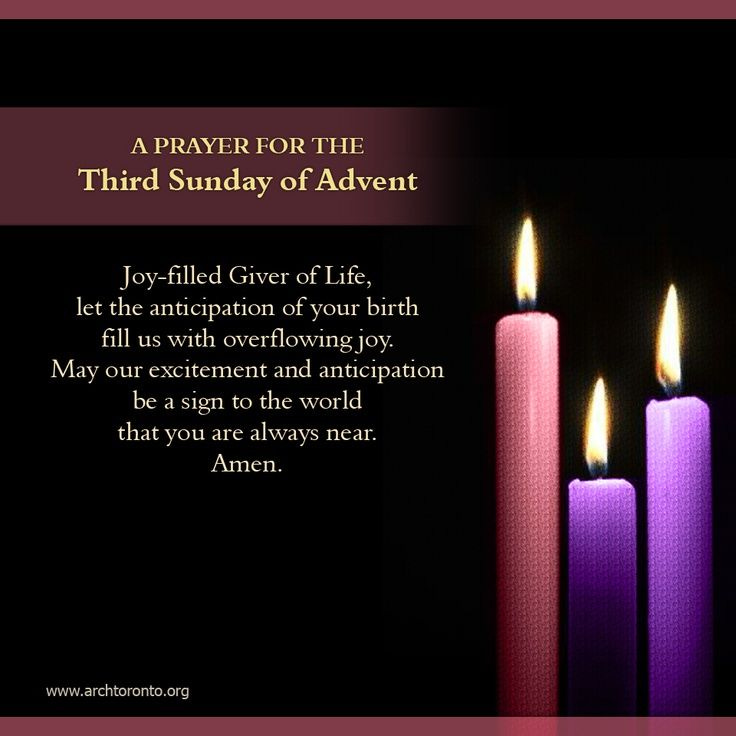
Whilst we wait for Christmas, whilst we wait for Jesus to come again, let’s take Christ as He is and not try to make Him into something He is not. Let’s resist the urge to have Jesus serve our will, and remember what we pray to G-d, Thy will be done.
If you look at the etymology of the word scandal, you’ll see in its origin the Greek word skandalon.