

Witness
through togetherness, unity, and humility, through the body Christ, we can become witnesses for the Lord

This is the second of two sermon reflections for Sunday, January 11, 2026. In this essay summarises Pastor Heechan Kim’s sermon on Witnessing Christ, based on Philippians.

artwork: the apostle Paul in prison, Rembrandt, 1627
Philipppians 1: 27-30, 2:1–5
27 Only, live your life in a manner worthy of the gospel of Christ, so that, whether I come and see you or am absent and hear about you, I will know that you are standing firm in one spirit, striving side by side with one mind for the faith of the gospel, 28 and are in no way intimidated by your opponents. For them this is evidence of their destruction, but of your salvation. And this is God’s doing. 29 For he has graciously granted you the privilege not only of believing in Christ, but of suffering for him as well— 30 since you are having the same struggle that you saw I had and now hear that I still have.
2 If then there is any encouragement in Christ, any consolation from love, any sharing in the Spirit, any compassion and sympathy, 2 make my joy complete: be of the same mind, having the same love, being in full accord and of one mind. 3 Do nothing from selfish ambition or conceit, but in humility regard others as better than yourselves. 4 Let each of you look not to your own interests, but to the interests of others. 5 Let the same mind be in you that was in Christ Jesus,
The Church of Philippi was facing opposition and disunity. In verses 29-30 Paul mentions the Philippians’ suffering for Christ, and alludes to his own suffering for Christ. Paul wrote the letter to the Philippians whilst in prison. During the time of the letter, 60-62 AD, Christians faced the opposition of living in a pagan and empire culture, in standing for their faith in Jesus, early Christians suffered persecution and alienation. For example, the story of Macedonia recounted in Acts 16. Paul and Silas cast a demon out of a slave girl in Macedonia. This angered her owners, and the crowd rose up against Paul and Silas. Magistrates ordered Paul and Silas stripped and beaten with rods, and then imprisoned. An earthquake freed Paul and Silas from prison.
In verse 27, Paul urges the Philippians to stand firmly together for the sake of the gospel. The church of Philippi had a diverse makeup of social and economic backgrounds, presenting a challenge to unity.
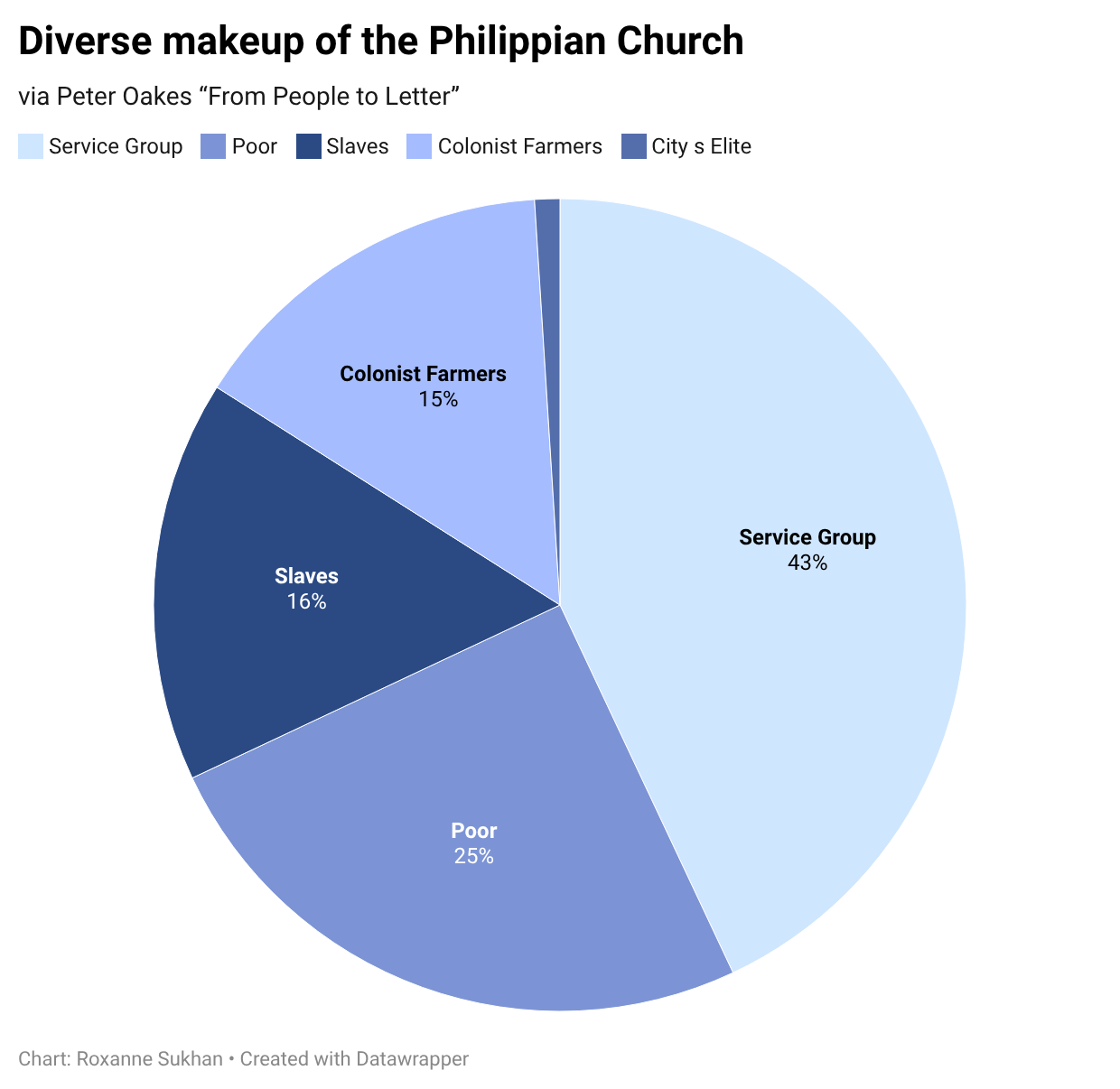
Why is unity so important to Paul?
Because unity serves as the primary way the church witnesses Christ to the world. In John 13:34-35 Jesus gives His disciples instructions. I give you a new commandment, that you love one another. Just as I have loved you, you also should love one another. By this everyone will know that you are my disciples, if you have love for one another. The world recognizes Christians from our love. Through love we become unified witnesses to Christ; a divided church compromises its capacity to serve as a witness to Christ.
Unity is a powerful way we share the gospel, it’s powerful evidence of the gospel. In Ephesians 2:14-16 Paul explains to the church in Ephesus the way Christ reconciles humanity with itself and to G-d. For he is our peace; in his flesh he has made both groups into one and has broken down the dividing wall, that is, the hostility between us. He has abolished the law with its commandments and ordinances, so that he might create in himself one new humanity in place of the two, thus making peace.
Christian unity serves as evidence of Christ’s saving work.
We live in a chaotic and divided world, in which the powerful seek their interests at expense of the vulnerable. We experience fragmentation and isolation on multiple levels. Christian togetherness brings peace and love to a world lacking both. Christian togetherness reveals Christ to the world. Christian togetherness exudes hope.
What can we do to foster togetherness? We can employ three practises in our lives —
Seek unity intentionally
Choose humility
By the power of the Holy Spirit.
In Philippians 2:1, Paul describes shared values (and realities) of the body of Christ — through encouragement in Christ, consolation from love, sharing in the Spirit, and compassion and sympathy, we forge a common identity in Christ. In Philippians 2:2, he describes intentional actions through which we can achieve unity —be of the same mind, having the same love, being in full accord and of one mind. Unity does not mean uniformity. It means seeking common ground through love.
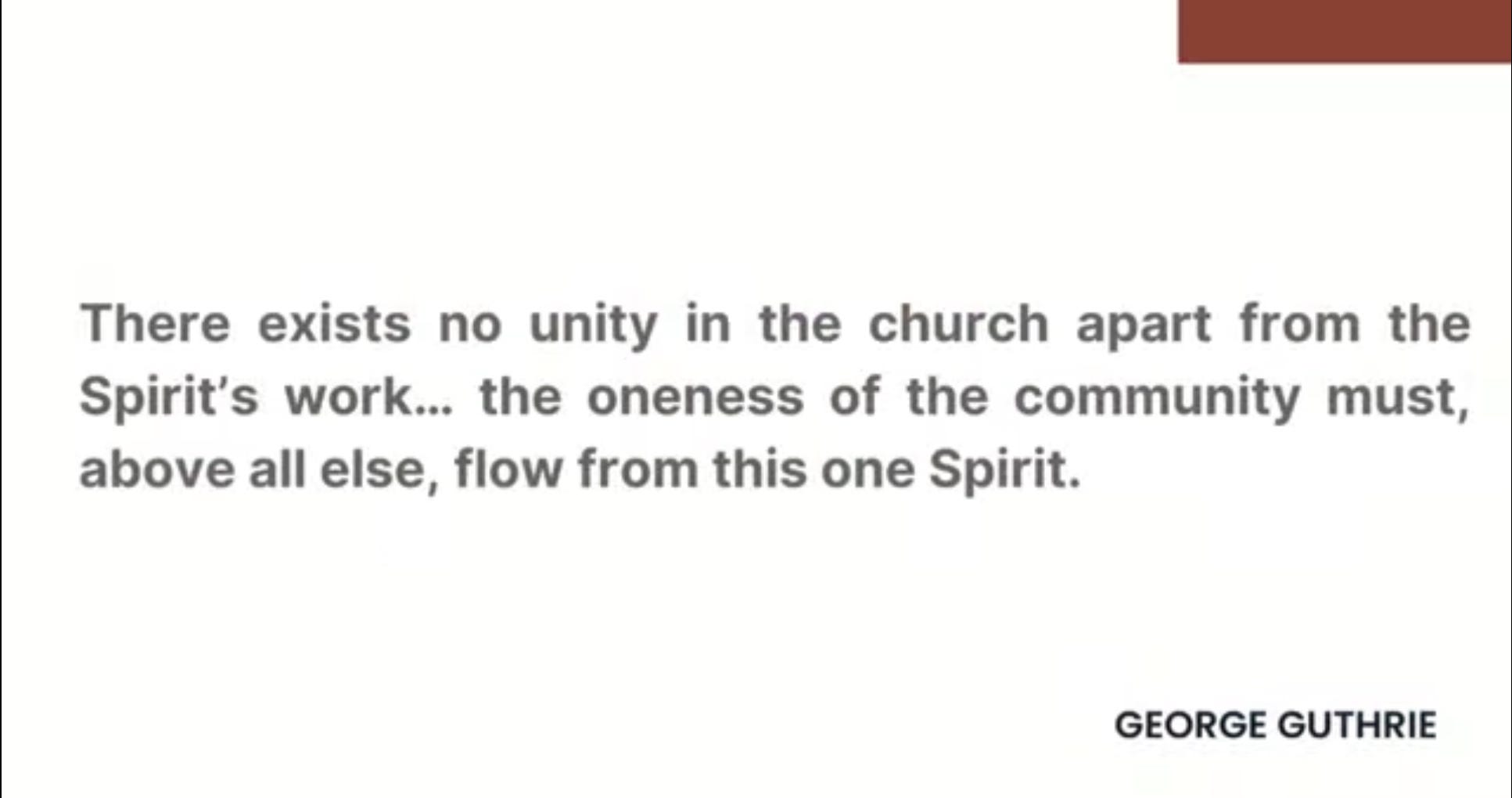
In Philippians 2:3, he urges the church of Philippi to do nothing from selfish ambition or conceit, but in humility regard others as better than yourselves. Pride begets division. A humble heart reconciles fragmentation, nurtures hostility, resolves conflict, deepens understanding. Humility creates space for love of Christ. Like a musical group or an orchestra, we must strive to play with, and not over, one another, we must seek harmony. When we play over one another we create noise. We must practise listening to one another and creating harmony. Humility needs practise, it’s not a natural human tendency. In Philippians 2:5, Paul advises the church of Philippi to follow the way of Christ in our relationships. We cannot achieve unity on our own, we need the Holy Spirit. We must stand firm in one Spirit, allowing baptism by the Holy Spirit to shape us into one body in Christ. The Spirit produces unity among us, we do not create unity on our own. Through our unity we witness Christ, make His life visible to the world, revealing the power of the gospel.
What Spirit are you of, and to what will you bear witness? How will you cultivate unity in your household, family, congregation, community, city, province/state, country in 2026?