

Wholeheartedness
a sermon reflection on Pastor Jeremy’s Sunday sermon about Revelations 3:14-22 and the church of Laodicea

This is the first of two sermon reflections for Sunday November 23rd. This essay reflects on the seventh and final sermon in my local church’s Book of Revelation sermon series on the seven churches. Pastor Jeremy delivered this week’s sermon.
If you appreciate these sermon reflections or any of my writing, please feel free to drop a tip in the tip jar, aka Buy Me a Coffee! Much appreciated.
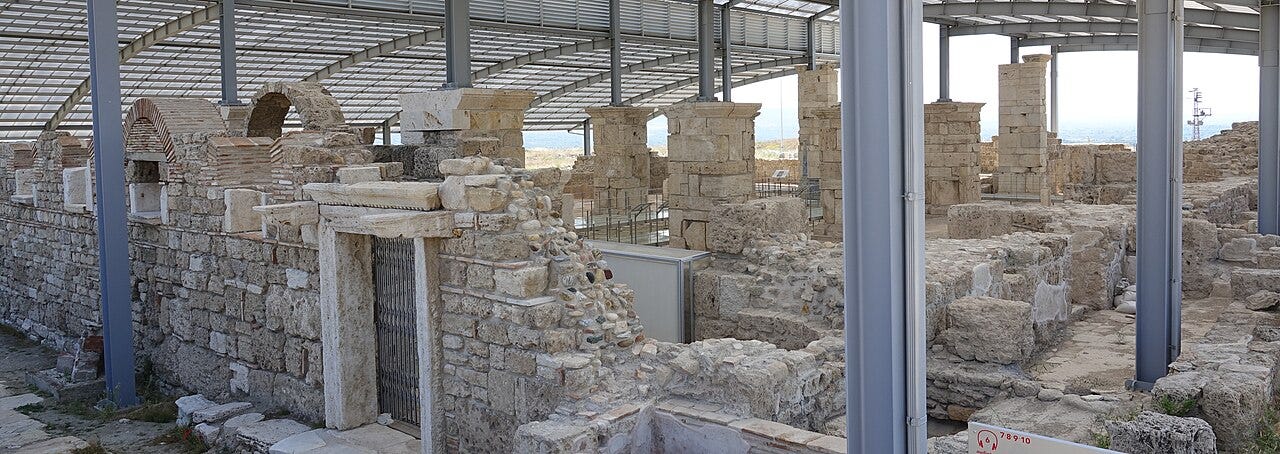
image: View of the church in 2017, via Wikipedia
The Message to the Church in Laodicea
14 “Write this letter to the angel of the church in Laodicea. This is the message from the one who is the Amen—the faithful and true witness, the beginning[e] of God’s new creation:
15 “I know all the things you do, that you are neither hot nor cold. I wish that you were one or the other! 16 But since you are like lukewarm water, neither hot nor cold, I will spit you out of my mouth! 17 You say, ‘I am rich. I have everything I want. I don’t need a thing!’ And you don’t realize that you are wretched and miserable and poor and blind and naked. 18 So I advise you to buy gold from me—gold that has been purified by fire. Then you will be rich. Also buy white garments from me so you will not be shamed by your nakedness, and ointment for your eyes so you will be able to see. 19 I correct and discipline everyone I love. So be diligent and turn from your indifference.
20 “Look! I stand at the door and knock. If you hear my voice and open the door, I will come in, and we will share a meal together as friends.21 Those who are victorious will sit with me on my throne, just as I was victorious and sat with my Father on his throne.
22 “Anyone with ears to hear must listen to the Spirit and understand what he is saying to the churches.”
How often do we find ourselves running from the one trying to keep us safe? There was a lady driving her car one day. She noticed a police cruiser behind her. She continued driving for a few blocks and eventually the cop engaged his lights and siren. The lady’s heart trembled in fear. As the police officer approached her to talk to her, the lady worried about what bad thing she might have done for the cops to stop her. She’d worked herself into quite a snit by the time the cop appeared at her car window. “Ma’am, are you okay? You have a loose wheel on your car, and I was concerned and that’s why I stopped you.”
How often do we fear punishment or condemnation from one who has come to keep us safe?
We might think G-d awaits in His heavenly abode, equipped with lightening bolts, waiting to punish us. Yet, Jesus comes to bring hope not condemnation.
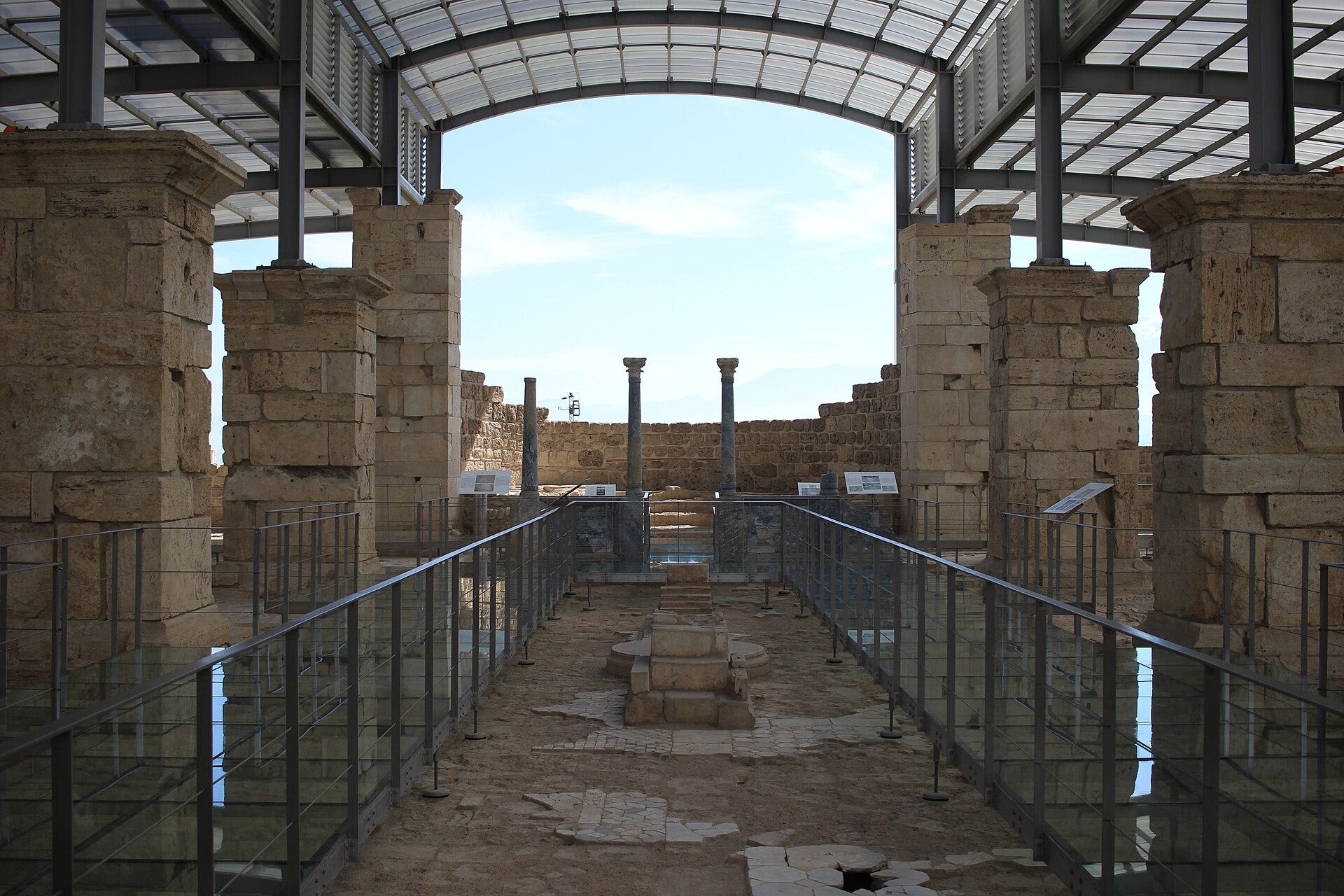
image: “Inside The Church of Laodicea, Laodicea on the Lycus” from March 2020, via Wikipedia
Laodicea functioned as the Wall Street of the ancient world— a financial hub and banking capital of Asia Monor. Laodicea had so much wealth that the city officials rejected the offer of disaster relief from Rome in the wake of an earthquake that struck the Greek city in 61 AD. The Laodiceans felt satisfied in their own wealth and derived comfort in their deeds done through that wealth. According to Biblical Archaeology, “not only was Laodicea located on major trade routes that connected it to important cities like Ephesus, Smyrna and Sardis, but also it was a center of textile production and banking.”
“Laodicea’s wealth had masked its spiritual bankruptcy. Jesus’ harshest rebuke is reserved for a church that was neither persecuted nor heretical, but merely comfortable.” — Craig Keener
Jesus invokes four images in His letter to the church of Laodicea in order to reveal the spiritual condition of the Laodiceans.
Water. Despite its wealth, Laodicea had no water source of its own. Instead it had to pipe water from two nearby cities—Hieropolis, known for hot water from hot springs, and Collosae , known for cold water from mountain tops. By the time the water reaches Laodicea from Hieropolis and Collosae, it had grown lukewarm and full of sediment. Laodicea had neither cold nor hot water. It had lukewarm water with much sediment. We can take that as a metaphor for spiritual health. The words in the passage convey a strong image: Jesus spitting the lukewarm from His mouth. Does the imagery seem reminiscent of that line from Leviticus that says the land will vomit its inhabitants who defile it?
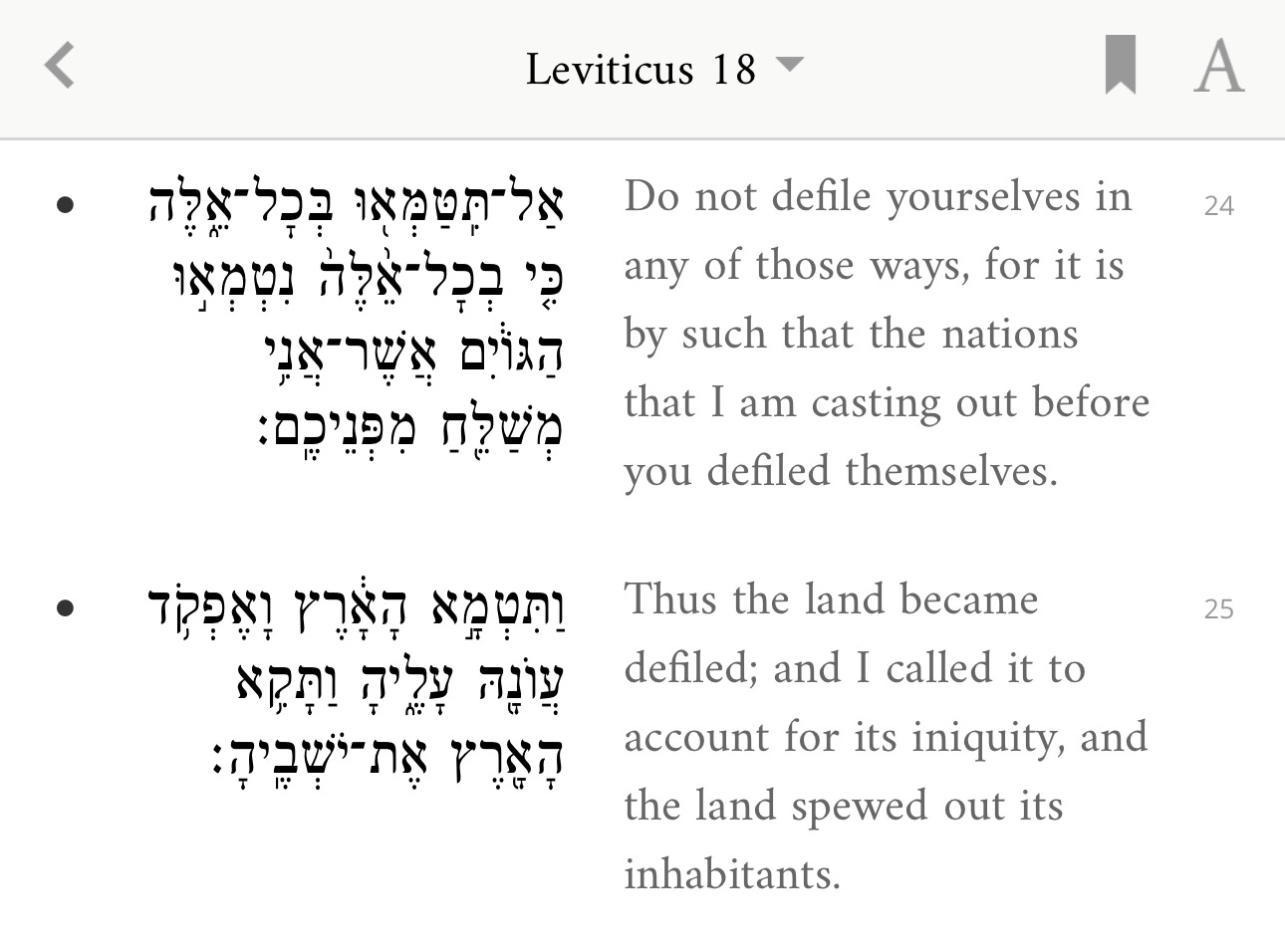
In other words— people forfeit G-d’s grace and protection when they sin unrepentantly. Through this text, we learn that sin of lukewarm spirituality proves unpalatable to G-d. Comfort can leave us complacent and apathetic to the needs of others and most importantly, to our own spiritual needs and health.
Gold. As mentioned already, Laodicea functioned as an important banking capital of Asia Minor—Laodiceans lived high off the hog. In His letter, Jesus tells the Laodiceans they’re poor. Why do we admire those who seem wealthy and rich who have all the things? What about the heart hidden beneath all the worldly bling? What about the spiritual condition of the big shot rich people? Jesus sees our hearts, he doesn’t care about the external bling. What does excess do to people? Does it make them empty? In many cases accumulation and the comforts of luxury empty a person out. Wealth and fame trap people, it’s a kind of enslavement. In a recent interview with The Professor of Rock, Alice Cooper talked Elvis being trapped by his fame. Cooper said that, without spiritual grounding, a person trapped by extreme fame and wealth—such as Elvis Presley or Michael Jackson—end up killing themselves with excess, as they try to fill the empty space inside them with material things.
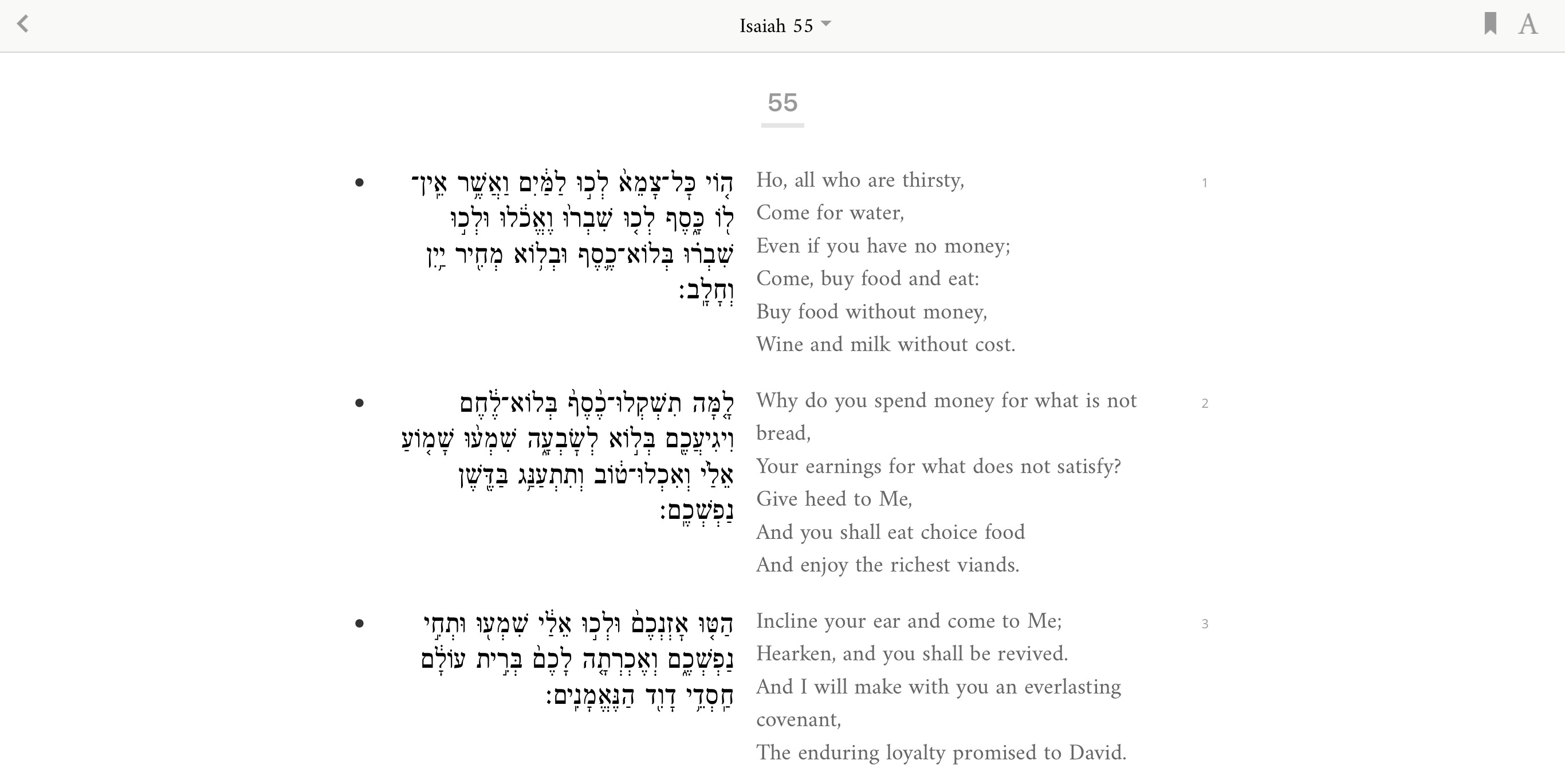
In the passage from Isaiah 55:1-3, we read about what sustains us, as we read the question why do you spend money for what is not bread?. G-d offers the covenant of His love of freely. We can’t buy it for any worldly price, and we can’t earn it by any deeds or labour. Pursuit of wealth will leave us empty—it will empty us out, because it becomes our idol, our object of worship. Richness in Jesus is > richness in worldly goods and pleasures. Do we ponder the danger of riches? In 1 Timothy 6:17 Paul writes to Timothy, his mentee and delegate, after all, we brought nothing with us when we came into the world, and we can’t take anything with us when we leave it. G-d gives us just enough which we need to enjoy life, why accumulate worldly wealth and things when we cannot take it with us?
Clothing. Laodicea functioned as a major textile centre, related to a special breed of black sheep that produced a special raven black wool. Despite having a thriving textile industry, the Laodiceans had only nakedness—they lacked spiritual clothing that only Christ can provide. The Laodicean Christians needed garments from lamb of G-d. In Revelations 9, John the Theologian writes about a great multitude clad in white robes standing before g-d. White symbolises purity. In the science of colour theory, white contains all the colours of the spectrum — if we imagine Jesus as the purity of white, maybe we can imagine the colour white containing all colours as akin Him drawing all things to Himself. Are we clothed with and in Christ?
Eye Salve. Jesus wants to anoint the eyes of the Laodicean Christians to see. Laodicea had a reputation as well known centre of ophthalmology; people would come from all over to receive diagnosis and treatment for eye disease. In His ministry Jesus healed eyes of the blind—He came to open spiritual eyes. We see with physical eyes, and we can’t see with these physical eyes the spiritual realm because our spiritual eyes are faulty/blind. We must ask for eyes to see beyond the cultural messages that bombard us. Jesus help me to see. In Revelations 3:19-20, Jesus says to the church of Laodicea I correct and punish those whom I love. Like a loving parent, Jesus disciplines those whom He loves. Jesus doesn’t pound the door down, He waits patiently at the door, gently knocking. Can we still ourselves enough to hear him knocking? Can we let Him into our abode, so that He can dine with us? It’s a deeply spiritual act to feed at a dining table with others. In Luke 19:5, Jesus says, Zacchaeus I must come to your house today, we must hasten to answer the call, like Zacchaeus did.
Jesus did not come to humanity as dominant king or general, He came as a baby, who grew into a humble carpenter. Jesus came as a humble and dependent figure, to show humility and dependence to humanity. He came through the ordinariness of human living, doing a craft and trade that required precision and forbearance.