

University Campuses are Private Property and Sometimes Subject to the Charter
from the saga of the Pallywood campus encampments we learned that protestors do not have the right to occupy property that isn’t theirs

So, here we are again. Frances Widdowson plans to attend another university campus to hold a public talk on “correcting the record” about the claims of mass/unmarked graves found at Tkemlups.
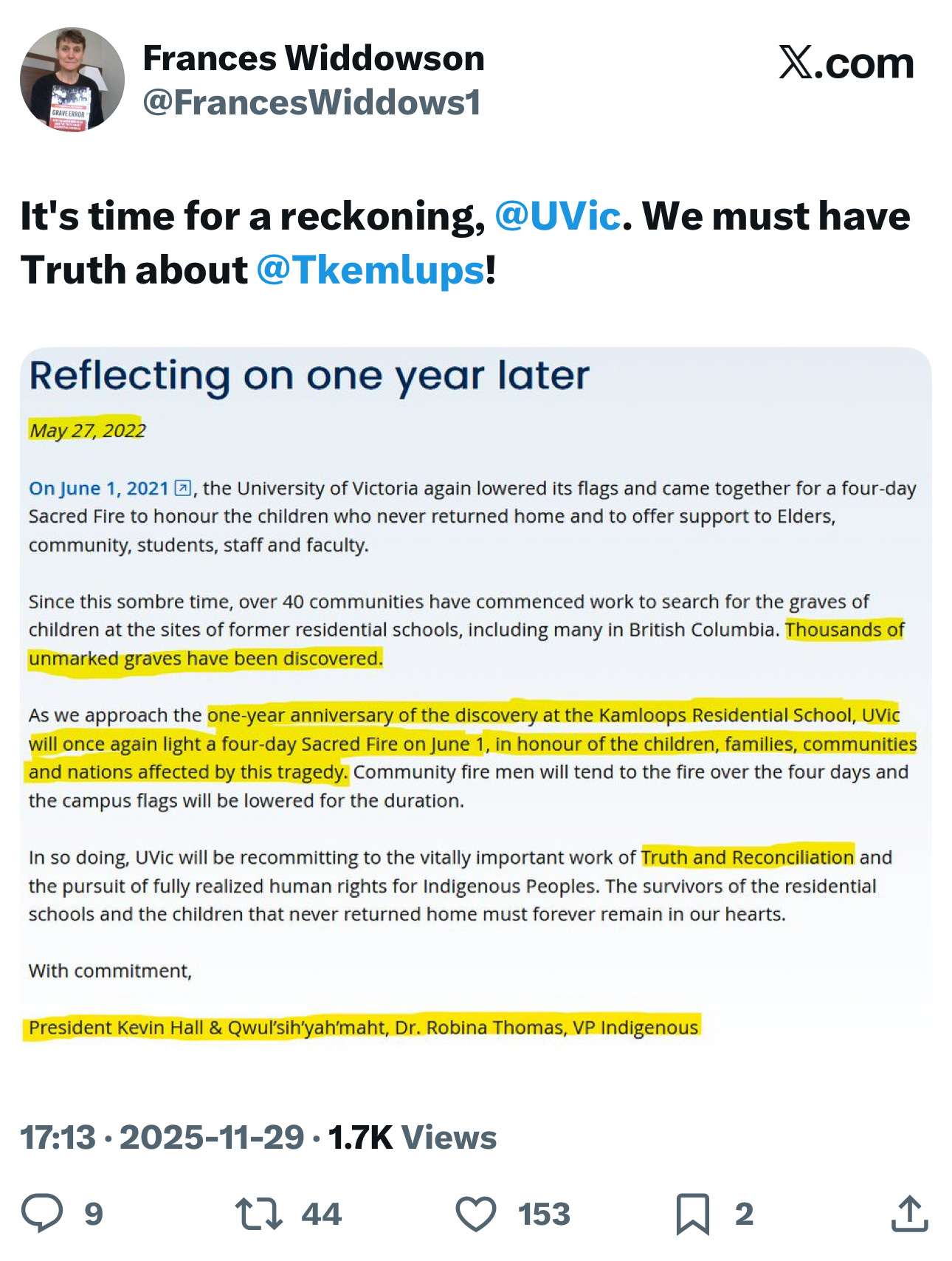
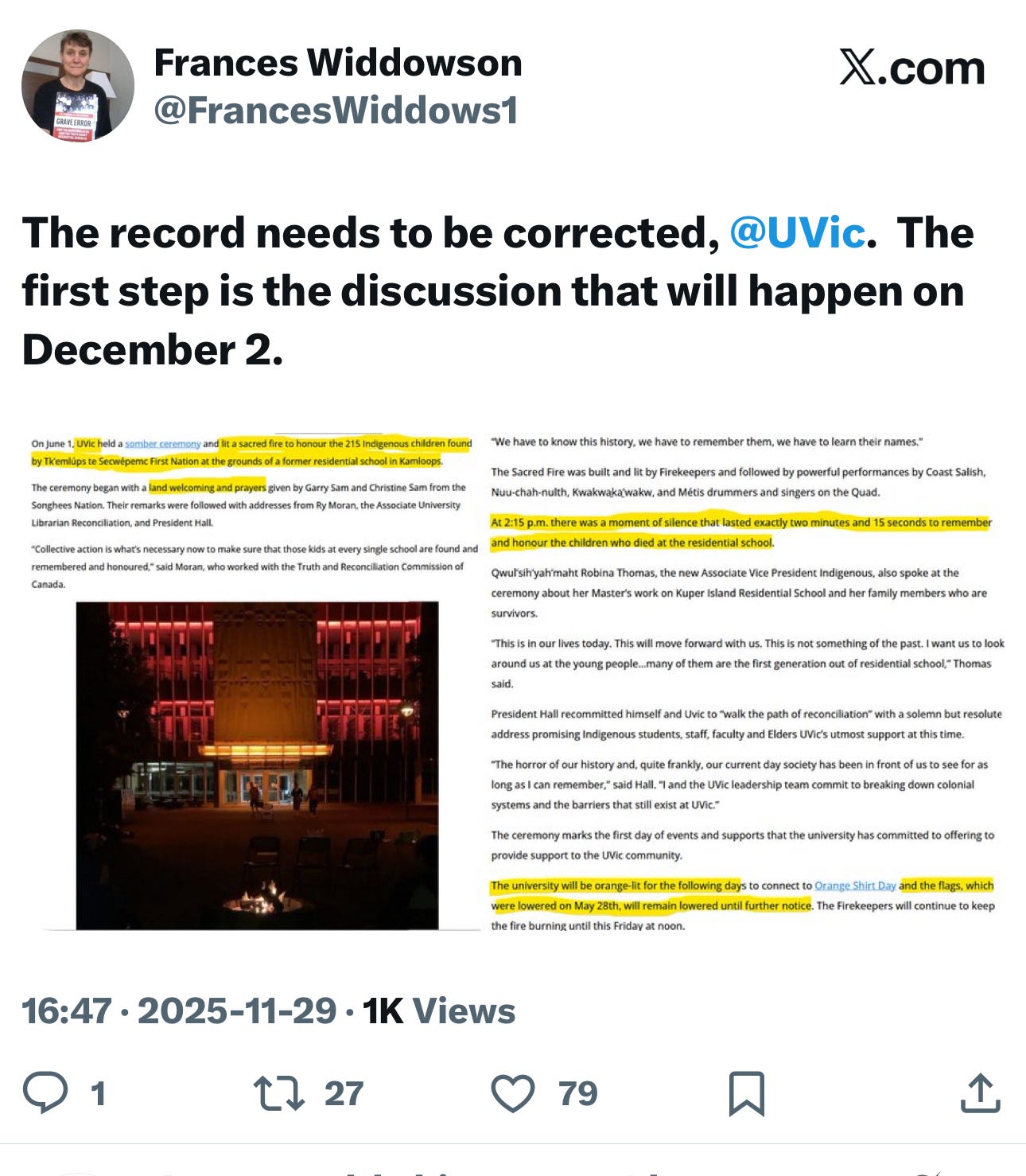
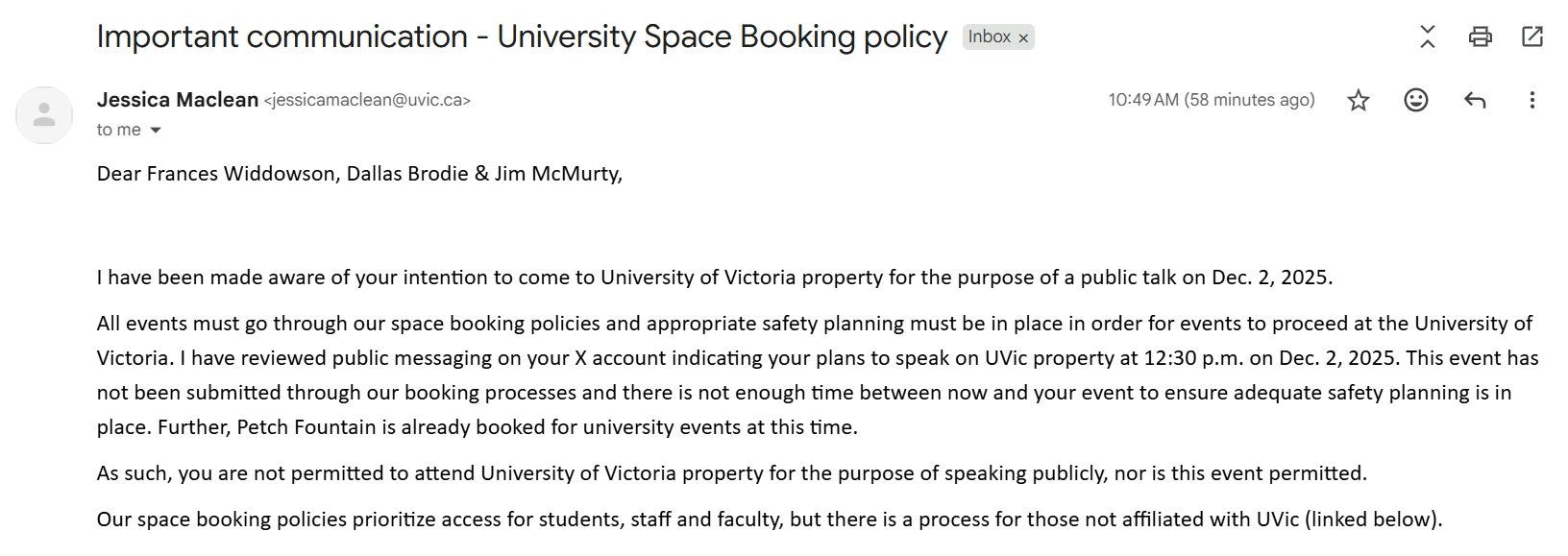
UVic responded and said no you can’t come and hold your public talk because you didn’t follow the proper channels to book an event. Widdowson isn’t taking no for an answer.

I wrote about this the last time Widdowson went to a campus to “correct the record.” That was last month, at Thompson Rivers University. You can go and read that article from last month.
Universities are Private Property: Widdowson Visits Thompson Rivers University

The claim made by the Tk̓emlúps te Secwépemc First Nation that “the Remains of 215 Children Have Been Found at Kamloops Indian Residential School (KIRS)” has divided Canadians since the 2021 announcement about the results of a GPR scan near the school. FN and their allies maintain the discovery of soil anomalies prove the stories of the FN Knowledge Kee…
So, this is somewhat of a repeat of my November 14th article.
Yes universities are public institutions. Also yes, university campuses are private property. Also, yes, in some cases the Charter can apply.
Look, it’s like this. If you thought the Pallywood encampments on campus were a trespassing violation then why would you think that anyone can just show up and occupy campus with their event? To me these are variations of the same behaviour—the Truthers showing up and occupying a university campus or Pallywood protesters showing up and occupying a university campus. In both cases we have activists occupying campus property as a means of promoting or commenting on an important public issue.
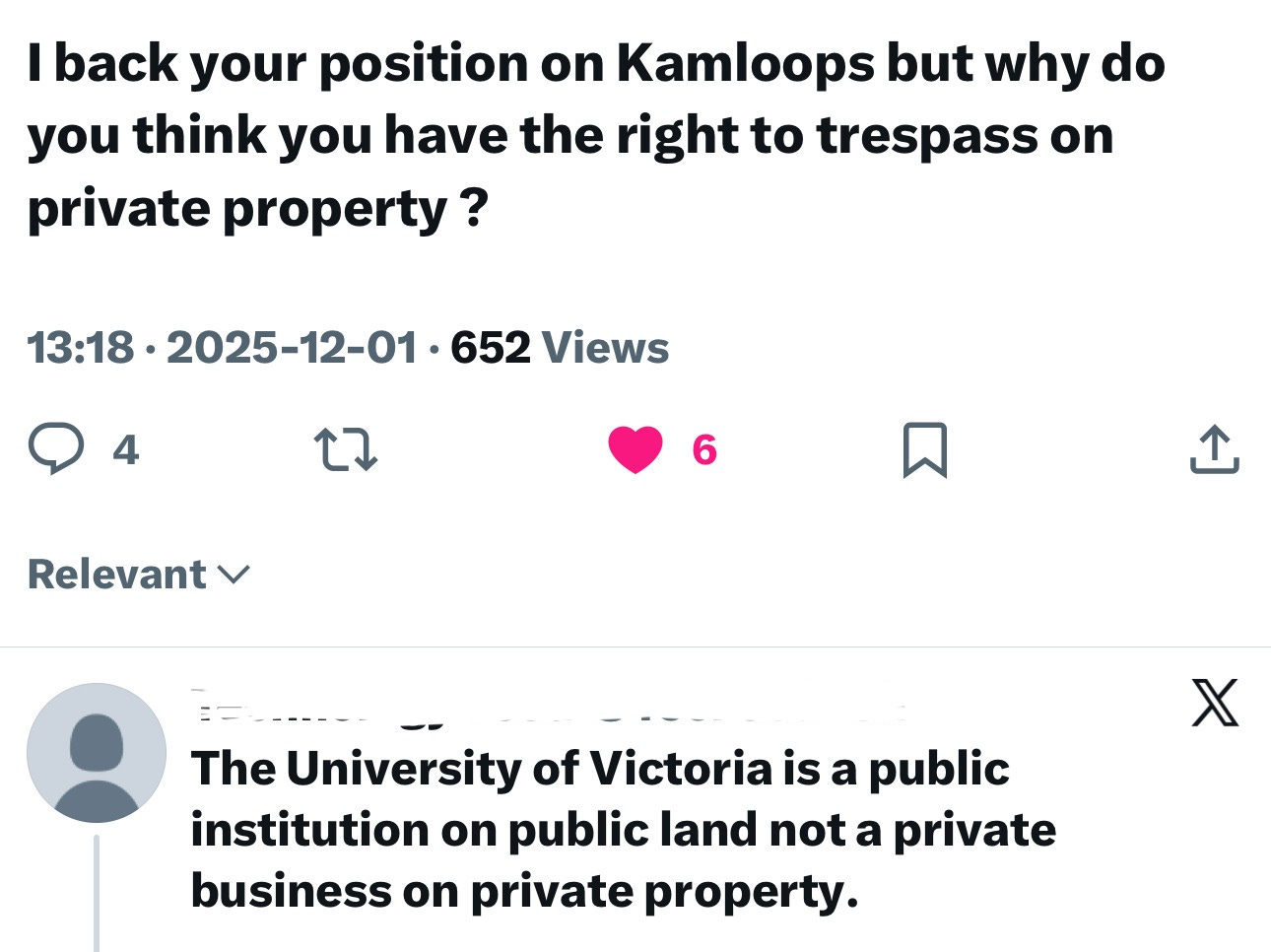
To repeat—university campuses are private property. They do serve a public purpose. They do receive public funds. They remain private property. There’s been a fair amount of debate about that. Here are some headlines and excerpts that give readers an idea of the breadth of the conversation about this question.
If you click on any of the screenshots below, you can get to the original article.


So that’s a smattering of what’s out there regarding the question are university campuses private property and to what degree does the Charter apply.
Case law—which is publicly available free of charge by the way—says that a university campus is not subject to the charter when it comes to deciding how its property is used. It also says free expression doesn’t stand as a defence for trespassing, and that “protestors do not have the right to occupy property that doesn’t belong to them.”
University campuses are subject to the Charter to the degree that they implement government programmes, (ie as a post secondary education institution), under which students’ freedom of expression must receive protection. So student freedom to post a Facebook post about a faculty member, or right to protest or hold a discussion on campus — Charter right. University administration deciding to ban an external entity from holding an event — not a Charter violation.
However, one case I looked at did decide that an anti-abortion student group wanting to hold an anti-abortion protest didn’t have their Charter rights violated when the university administration revoked its permission after being advised to do so by the governing student society. The judicial decision reasoned that decisions about use of a university’s outdoor property don’t come under the Charter.
To repeat— when I looked at the case law I didn’t see any defense for campus outsiders having a Charter right to occupy a university campus without the permission of the university itself. Does publicly accessible institution on private property mean public permission to occupy premise or property of that institution to conduct an event not sanctioned by the university?
There might be a loophole if the outside entity could find a student or faculty or other university-based group willing to sponsor the talk or event about the Tkemlups controversy. Still the opposition would dangerously fierce maybe even physically violent and pressure to cancel would be massive. As stands now, what Frances Widdowson proposes to do is trespassing.
Perhaps the attention these events draw do provide a means by which Widdowson and other Truthers can keep the topic of the interpretation of Tkemlups GPR results as mass/unmarked graves in the news headlines, and thus in the minds of Canadians?
FTR I do agree with Widdowson’s position on the mass/unmarked graves. I disagree with the approach taken by her and her Truther supporters to force their way onto campuses which don’t want them there. We cannot change people’s beliefs with information and facts. We cannot shock and outrage them out of their sacredly held beliefs. This approach only creates more division and hostility. The issue has become so inflamed that I don’t know how we can address the problem of misrepresentation of facts and the outrageous claims that have gone along with it. In an ideal world, we would have ethical and morally courageous leadership to guide the process. However we don’t have that here in Canada at this time — or we have a serious dearth of good and qualified and courageous and competent leadership.