

Incarnation is Salvation
a reflection on BZ’s last sermon of 2025

This is the first of two sermon reflections for Sunday, December 28, 2025. In this essay I share my reflections about Brian Zahnd’s sermon, called Incarnation is Salvation, based on Isaiah 63:7-9
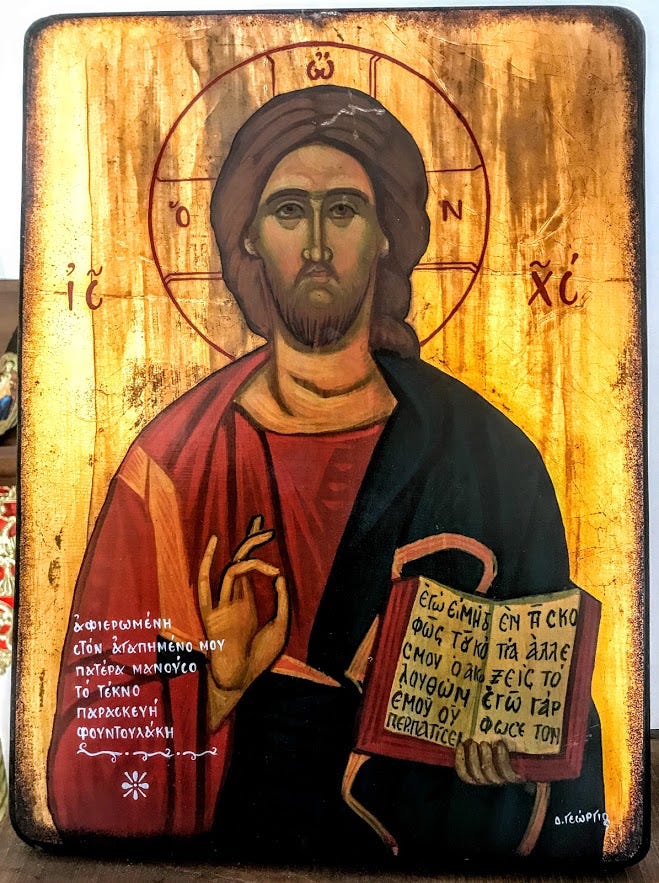
artwork :: an icon of Christ, the Light of the World in a small chapel in Georgioupoli in Crete
Isaiah :: 63:7-8
7 I will recount the gracious deeds of the Lord,
the praiseworthy acts of the Lord,
because of all that the Lord has done for us,
and the great favour to the house of Israel
that he has shown them according to his mercy,
according to the abundance of his steadfast love.
8 For he said, ‘Surely they are my people,
children who will not deal falsely’;
and he became their saviour
9 in all their distress.
It was no messenger or angel
but his presence that saved them;
in his love and in his pity he redeemed them;
he lifted them up and carried them all the days of old.
G-d is faithful to His people. His presence saved the people. In verses 8 and 9, Isaiah means more than what he seems to mean. The testimony of Jesus is the Spirit of prophecy. Two words in Hebrew: pnim yosha … g-d saves.
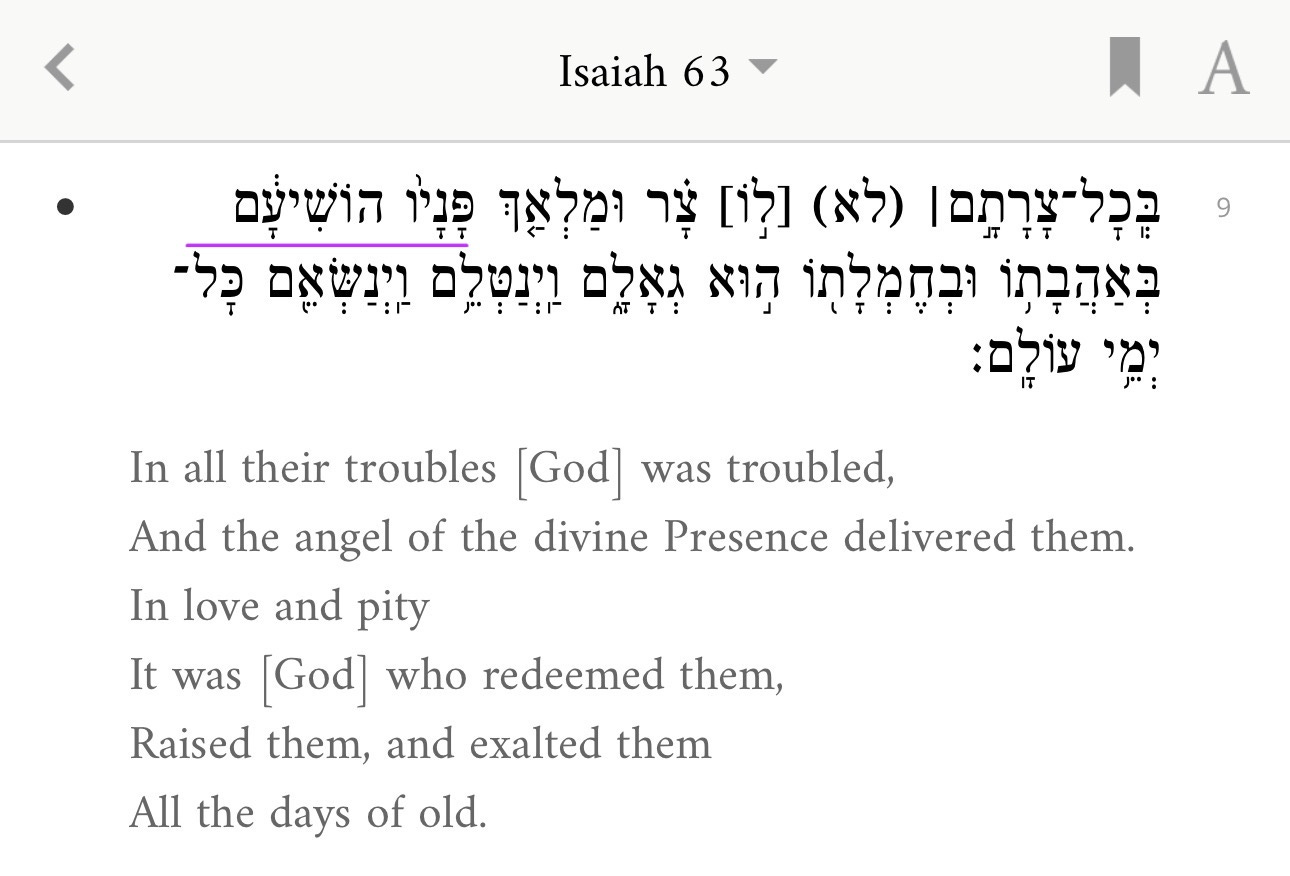
The incarnation fulfilled pnim yosha. G-d is with us: Emmanuel. G-d becomes one of us and guarantees salvation, Humanity becomes founded in Christ.
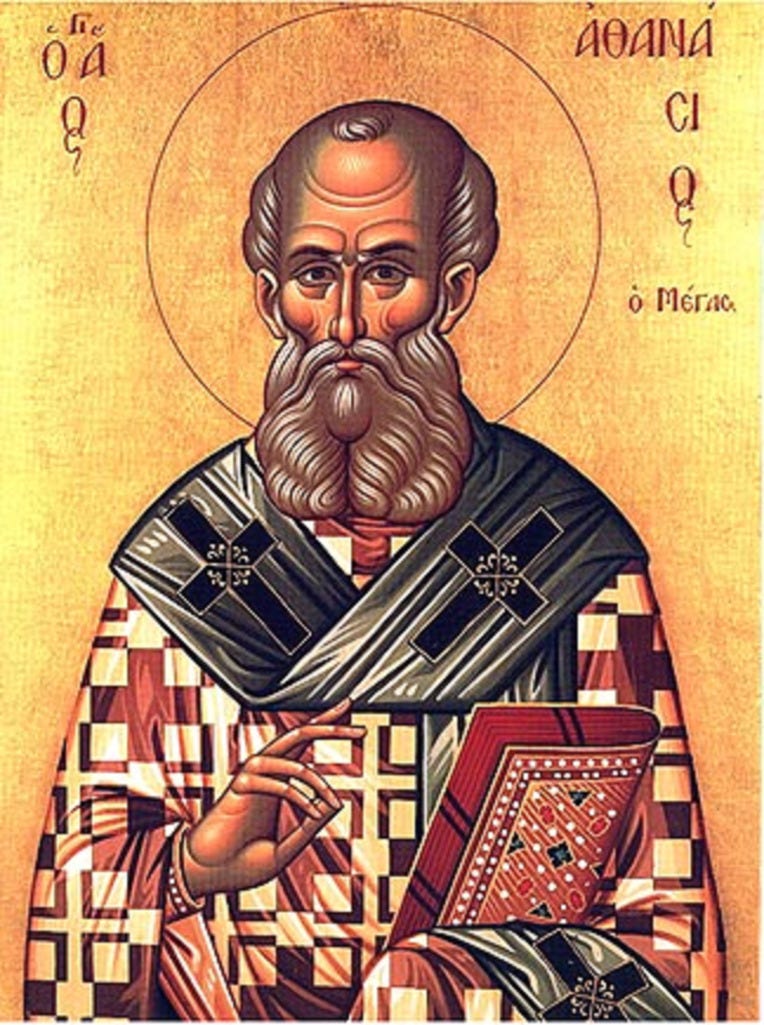
Athanasius lived from 296-373, spent most of his time in Alexandria, Egypt, the church made him a Doctor of the Church. He wrote an important text called On the Incarnation. In chapter 14, Athanasius talks about the paterfamilias portrait, a portrait of the head of the household. When paterfamilias portrait became damaged the artist would not trash the portrait, he would summon the subject to pose for another portrait. So it happened with humans made in the image of G-d. G-d came to dwell amongst us to renew the Divine image of humankind. He didn’t give up on his Creation.
“Even so was it with the All-holy Son of God. He, the Image of the Father, came and dwelt in our midst, in order that He might renew mankind made after Himself.” —Athanasius, On the Incarnation
Man reached for knowledge too soon, tried to get knowledge apart from G-d. The serpent deceived Adam and Eve, convinced them that they only needed knowledge, they didn’t need to grow with and through G-d. Humans became derailed from our telos. All of Creation became Fallen. G-d didn’t throw away the embodied spirit. He didn’t throw away the wooden portrait, to use the metaphor invoked by Athanasius. In his genealogy of Jesus, Luke positions Adam as the son of G-d. Through the incarnation, Jesus takes Adam’s place as the son of G-d. John Behr, who translated On the Incarnation, and whose teachings you can find on YouTube, and also through Open Table Conference, would say Adam was a type of the One to Come, that Jesus was always the prototype.
It was our sorry case that caused the Word to come down, our transgression that called out His love for us, so that He made haste to help us and to appear among us. It is we who were the cause of His taking human form, and for our salvation that in His great love He was both born and manifested in a human body. —Athanasius, On the Incarnation
It was fitting for him, for whom and by whom all things exist, in bringing many children to glory, to make the founder of their salvation perfect through suffering. —Hebrews 2:10
The ultimate telos for human beings directs us to be like G-d. When we tried to be G-d apart from G-d, that’s when the Fall happened. Derailed trajectory. Creation Fallen. G-d doesn’t give up on humanity, though. Rather, G-d wants to bring us to glory, ie to be like G-d.
G-d doesn’t fail. Omnipotence doesn’t mean tyranny and forcefulness. He allows us to choose. And, still, He persists. The founder of Creation becomes perfect through suffering with humanity. Jesus perfects Himself in His humanity as a merciful sympathetic high priest.
Athanasius wrote a scandalous line in his book. You can find it on page 99. “The Word of God Himself assumed humanity that we might become God.” —Athanasius, On the Incarnation
Thus he has given us, through these things, his precious and very great promises, so that through them you may escape from the corruption that is in the world because of lust, and may become participants in the divine nature. — 2 Peter 1:4
Humans are noble, we have the potential to become G-d, and it’s why we have capacity for great evil. Remember though, the words of Hebrews 2:11, for this reason Jesus is not ashamed to call them brothers and sisters. We do not bask in our shame because Jesus isn’t ashamed of us. We are all brothers and sisters together adopted into this family by and united in the Holy Spirit.
The Bible uses the word Hamartia, Greek, meaning “missing the mark”, it refers to a tragic downfall. Death entered the world through sin, so we would not live eternally in the derailed trajectory. After the Word came death ceased to serve as a grace, and Jesus defeated it. G-d is capable of a mortal death, yet He’s fully human and fully G-d. Jesus didn’t pay the ransom to G-d, He paid the ransom to evil, to the one who enslaved us into death. Death could not digest divinity, and Hell vomited Jesus up.
“Since the children have flesh and blood, he too shared in their humanity so that by his death he might break the power of him who holds the power of death—that is, the devil” — Hebrews 2:14
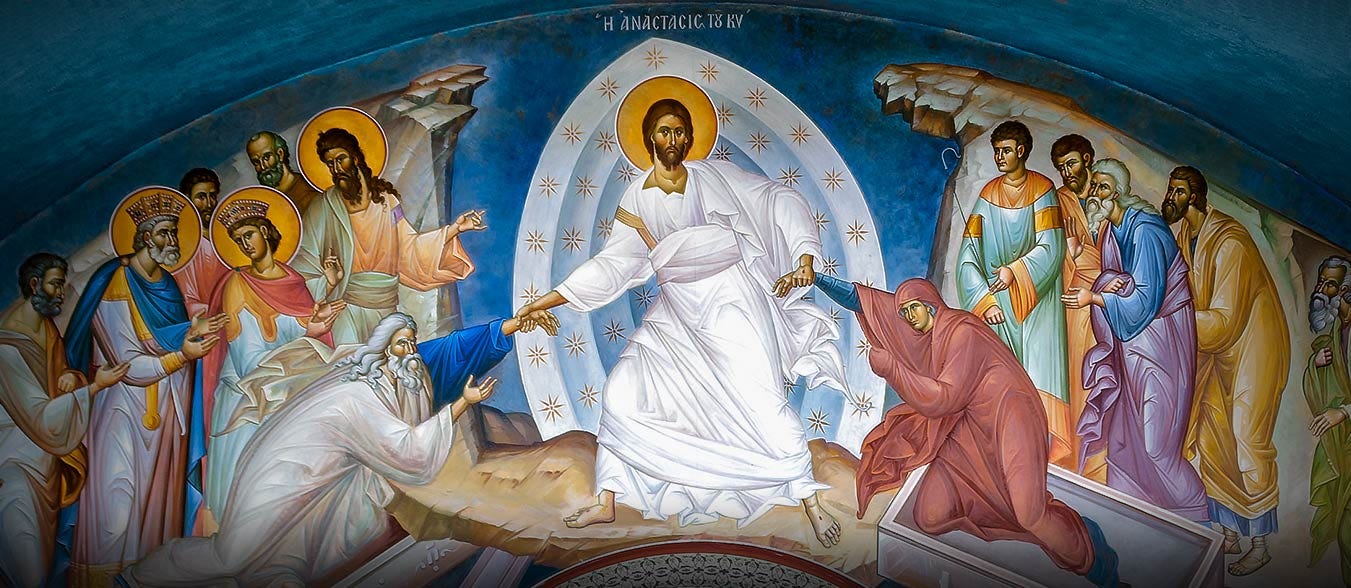
Maximus the Confessor lived from 580-652. He argued that Jesus had both human and divine will, and suffered persecution for that theology. He wrote the following commentary on Hebrews 2:14.
“He destroys the tyranny of the evil one who dominated us by deceit. By casting at him as a weapon the flesh that was vanquished in Adam, he overcame him. Thus what was previously captured for death conquers the conqueror and destroys his life by a natural death. It became poison to him in order that he might vomit up all those whom he had swallowed when he held sway by having the power of death. But it became life to the human race by impelling the whole of nature to rise like dough to resurrection of life. It was for this especially that the Logos, who is God, became human—something truly unheard of—and voluntarily accepted the death of the flesh.”
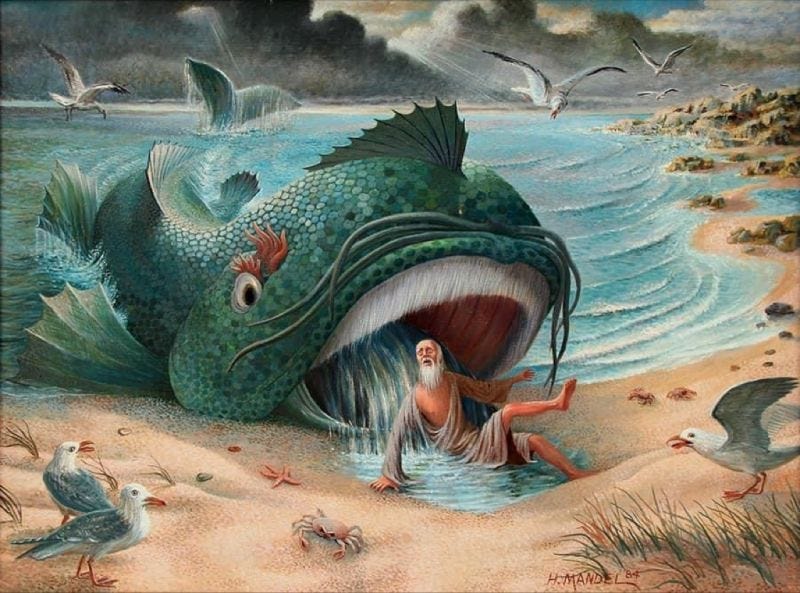
Hell cannot digest the divine. As Jonah’s prayer to the Lord caused the whale to vomit Jonah up, Jesus causes Hell to vomit Him up, only He brings the dead with Him.
We rejoice at Christmas because Jesus has come into the world, He took on human skin, he came to kick death’s ass—that’s the incarnation, not birth, not death, but resurrection.
Incarnation = Salvation.