

Cruel Kindness: the Story of Brianna MacDonald
a reprint from August 2025

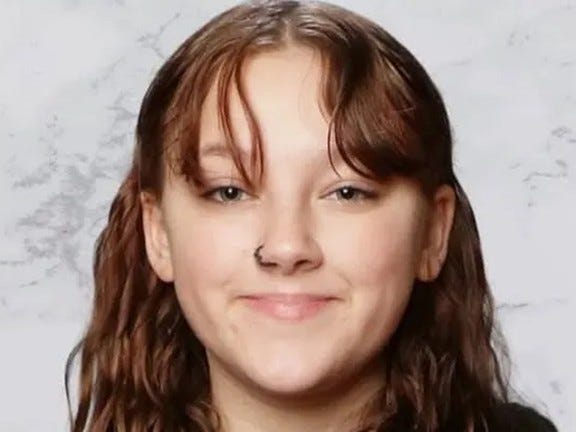
At the tender age of 13, Brianna died alone at the foot of a tree in an Abbotsford homeless encampment. She died from a drug overdose. A failed drug policy killed her. The failure of a government under the spell of a radical progressive ideology killed her. The systemic refusal and failure to provide supportive care to the parents and families of distressed children led to the untimely death of Brianna MacDonald.
We receive a failing grade when it comes to providing ethical, safe and effective care for children afflicted with emotional distress who have turned to drugs for relieve from the awful symptoms and despair-riddled struggle of their mental illness. We now live under a system of governance that instructs us to be kind; in the name of that kindness the system’s managers have imposed a public health strategy predicated upon deinstitutionalisation and community-based mental health care and harm reduction.
We face an unprecedented crisis of mental illness, of alienation and loneliness and grief, of enslavement to addiction, of death caused by drug overdose. We have institutionalised suicide and we call it medical assistant in dying. Does all this numb us to the unique value of each life and the overall sacredness of life itself? We have watched the progressive policy makers cycle through the gamut of their social justice experiments, all of which have failed us and our children and families miserably.
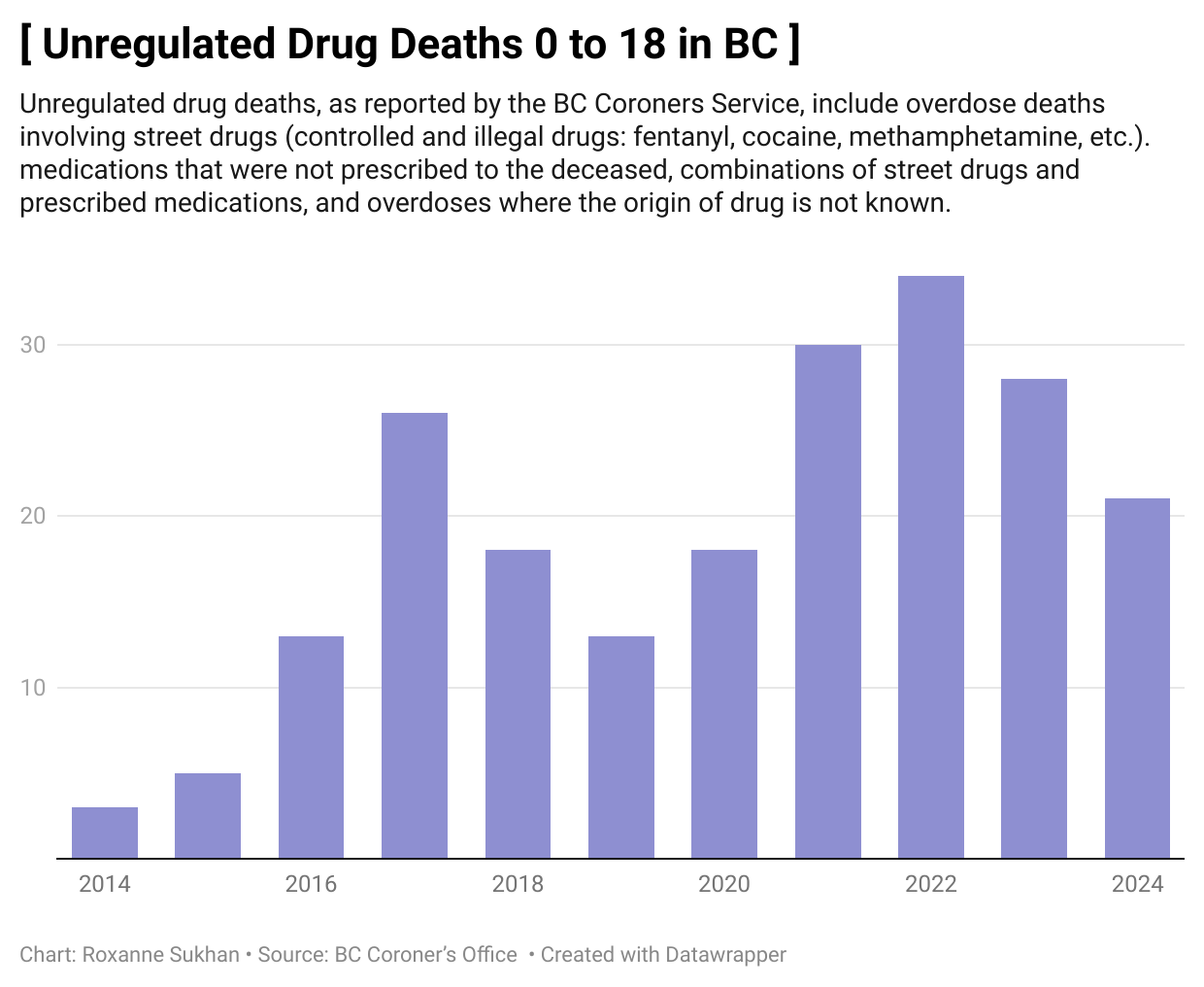
Drug overdose has now become the leading cause of death amongst youth in BC. Over the past decade we’ve seen deaths from unregulated drugs in the 0 to 18 age category rise from 3 in 2014 to 21 in 2024. On its face, the number seems low and might lead us to think no big deal. Any parent knows differently. Any parent knows that each of those 21 children have parents, grandparents, siblings, and friends. One death becomes the universe when it’s your child.
A little over a month after her 13th birthday, Brianna MacDonald died of a drug overdose. Her death came on the heels of a horrific struggle with mental illness, and a cruelly apathetic and uncaring health care system, which allowed Brianna to suffer and die.
When Sarah MacDonald begged health care professionals for help to get her daughter Brianna better, she received the following response, it’s “… her choice, her body, her right.” Brianna’s “choice and right” led her to the streets, where she died alone after 4 weeks of homelessness. No authority would help Brianna’s parents force her off the streets and back into the safety of home.
Did doctors and other professionals in the system actually tell the parents of a 12 year old child who attempted suicide over 20+ times that, if the child wanted to kill herself, that’s her choice? Yes, they did. Brianna’s life never mattered to the many health care professionals who encountered her in the course of their work.
What has happened in Canada?
Why have we numbed ourselves to viewing suicidality as a choice that individuals can engage whilst we stand by and hand them the means to end their lives?
We hear all about Harm Reduction and how it saves lives. What Harm Reduction? What saved lives? We hear all about social justice. What social justice can we have, with a system in which medical and allied professionals allow children to engage in harmful and deadly behaviour and refuse to help the parents keep their child from harm?
Do no harm serves as a fundamental ethic of all health professionals and it provides the foundation of health care delivery. How did we get to the point where doing harm has become twisted into health care provision because doing harm fulfils the requirement of harm reduction? How does facilitating or perpetrating harm reduce harm?
How do we coexist with this farcical social justice ideology that’s come to dominate the delivery of health and social services? How do we rationalise a system of social justice that has lead to mass deaths, all preventable?
Did we just watch a system of health care about which we routinely brag tie the hands of parents and force them to watch their troubled daughter fall into a severe mental illness crisis that drove her to addiction and homelessness and caused her to die alone in a homeless encampment? Did we just watch health care professionals give a child drug paraphernalia and instructions on how to use deadly drugs?
Do we still think Harm Reduction will save lives when we watch more and more parents grieve for the children that failed drug policies and non-existent mental health care caused? Why?
Brianna started experimenting with cannabis around the age of 10. She began to exhibit signs of collapsing mental health. Her parents noticed and grew concerned. Eventually Brianna moved onto more powerful substances in her bid to self medicate. Her behaviour devolved over time.
“Her drug of choice was Molly (MDMA aka Ecstasy), but she would try anything she could get her hands on. Brianna had over 20 recorded suicide attempts. She tried to overdose on prescription drugs she would steal. Over time, you could see she was going down a very dark path. We, as parents, started to discuss what we could do and tried to get her help.” (Lance Charles, step-father)
Sarah and Lance sought help from medical professionals. Despite a variety of prescription treatments, Brianna experienced no relief. Her condition worsened. She reported hearing demons inside her head. Only the illicit drugs could chase them away.
Lance noticed strange cars pulling in front of their home. “I asked what this person’s business was in ways reach out to us and we were there for her. These were two 16-year-old children who were there to sell our daughter Molly. We took pictures of the licence plate and reported it to the police. The police never did anything. They didn’t even report back to us.”
Lance began to follow his daughter to see what she got up to. It shocked him to see that Brianna had begun attending a harm reduction site, which gave her “…these zip-lock bags full of needles, cooking kits and pamphlets on how to cook the drugs and safely use them.”
I can attest to the fact that Harm Reductionists have long felt emboldened to allow into their “safe injection sites” users who visibility look under-age because they tell themselves they’re saving a life by letting a child into the site to use harmful illicit drugs unbeknownst to their parents. I can attest to that because, during my brief time at Insite 22 years ago, we did just that. We would allow minors to lie about their age and we would take their lie at face value. I remember a girl aged 15 coming into Insite because I went to the staff room to get my sweater and give it to her when she reported feeling cold and didn’t have warm cloths.
How do we live with ourselves, knowing we enable that diabolical situation? Another question I can’t answer.
Children can’t drive, they can’t buy cannabis at the dispensary, they can’t vote, they can’t buy alcohol at the store, they can’t buy cigarettes. Kids can’t vote or drive because they lack the developmental capacity to manage these adult responsibilities. We don’t let children buy cannabis or cigarettes because it’s harmful to them—that’s actual harm reduction. Growing up in the 1970s and 1980s, my friends could buy their parents cigarettes at the corner store and they couldn’t buy illicit drugs from high school aged kids. Now kids can’t buy their parents cigarettes and they can buy molly or whatever illicit drug of choice from the neighbourhood high schoolers.
Does anyone else find this upside down? How can a kid walk into a Harm Reduction facility and receive drug paraphernalia and instructions on how to prepare and inject drugs?
I want to know, can those who works in the system face parents, look them in the eye and explain why they condone enabling minor’s Schedule One drug use and facilitating their devolution into addiction?
Harm Reduction Evangelicals tell us it’s Harm Reduction to let kids enter “safe injection sites” and use drugs! They tell us it saves lives. They tell us we need more “safe supply.” Buying legal pot and smoking nicotine = bad. Injecting opioids with an insulin syringe = good. Can anyone explain the logic to me, because I’m at a loss to understand it.
The February before her death, Sarah caught Brianna overdosing in the kitchen and called 911. The emergency staff pumped her stomach and sent her home, against her parents’ wishes, despite pleas for real intervention to save their daughter’s life. The ER sent the family home with a Narcan kit. According to Todd Doherty, MP for Cariboo—Prince George, Brianna overdosed as many as 34 times. In their testimony before the House of Commons Standing Committee on Health, Lance and Sarah said they took her to the hospital at least 20 times. They wanted to get help and keep Brianna safe.
Out of these 20 visits to the hospital for overdose, the hospital kept Brianna twice. She wrote her own mental health safety plan, according to her parents. Each time Sarah and Lance sought help for Brianna from professionals within the health care system they met resistance and apathy from professionals—Brianna’s life never mattered to them. Excuses for lack of treatment intervention ranged from she has behavioural issues, she’s too young for treatment, she’s too young for a mental health diagnosis. The professionals could do nothing to help this tormented suffering child who told her parents she could hear demons in her head.
For whom does this system exist? What harm do we reduce through our existing system? Who bears accountability in this chaos patchwork of government bureaucracy? We don’t know who bears responsibility because we don’t know who provides care for the dangerously tormented and suffering. We can barely get basic transparency such as number of publicity funded treatment beds or number of people in receipt of “safe supply”, or number of people who end up in treatment because referred by a Harm Reduction program.
How many lives does “Harm Reduction” save when 5 people die every day from drug overdose? No, we won’t find the answer in expanding Harm Reduction. No, we won’t find the answer in “safe supply”. We will find the answer in developing a comprehensive and co-ordinated recovery-based strategy towards drugs and addiction and mental illness and homelessness.
Shortly after turning 13, Brianna’s mental health began to collapse in a dangerous way—violent acting out that injured her parents and jeopardised her siblings. In his testimony before the federal Standing Committee on Health, Lance Charles stated that things “grew darker”. Her rage intensified as her dependence on drugs. Her clandestine drug use became routine.
“She was up all night sneaking around and doing drugs. She started to come and go as she pleased. Sarah and I would often get woken up by the police bringing her home because she was found extremely intoxicated. Police would also be needed when she had her violent episodes and threatened to kill herself. An officer asked me once what I would like him to do. I told the officer, ‘She’s threatening to harm herself. Please invoke the Mental Health Act and force her into a hospital.’ The officer told me he couldn’t because it’s against her will.”
Sarah and Lance discovered the Infants Act, which grants children the right to emancipate from their parents and make their own health care decisions. The authorities and professionals claimed they could do nothing to help Brianna help herself because her supposed right to choose for herself took precedence.
As I researched and wrote this article I began to understand the diabolical nature of the culture that created MAiD and wishes to extend it to children, whom advocates call mature minors. When I read the Infants Act I don’t see permission for health care providers and police to neglect their duty to keep a distressed and arguably psychotic child safe. I read about “… reasonable efforts to determine and … conclude that the health care [or acquiescence thereof] is in the infant’s best interests.”
Darkness swallowed Brianna whole—she slipped further away from her parents and herself. Policy informed by Social Justice rendered Brianna’s parents powerless to invoke any kind of institutional-based help to keep their daughter safe and alive. Through the story of Sarah and Lance, we learn that our system doesn’t have the resources or skill to provide relief and care for a child presenting as distressed as did Brianna.
I’ll put it bluntly — Harm Reduction and deinstitutionalisation of mental health care killed Brianna MacDonald. Irresponsible interpretation of the Infant Act killed Brianna MacDonald. Parents get the impression they’re chaperoning the government’s children, and as such, have little authority and power to protect their children from real deadly harm. Imagine doctors telling you they couldn’t treat your dying child, even though you know treatment options exist. That’s what Sarah and Lance faced.
“Brianna’s father and I begged doctors to keep her in hospital. The doctors overlooked what we said and released her, sending us home with Narcan kits,” said Lance Charles in his testimony to the House of Commons Standing Committee on Health.
Doctors admitted Brianna to the children’s hospital, which lacked the capacity and skill to manage her care in the face of her extreme distress, which included screaming and violence. They sent Brianna to The Child and Adolescent Psychiatric Stabilization Unit (CAPSU) at Surrey Memorial. Whilst there, she stabbed her hand with a pencil and shortly thereafter the health care team decided she could receive her discharge from the unit.
“Brianna became so violent with us that she caused some serious damage to her mom, who ended up in hospital with a severe concussion and some serious brain trauma. I [Lance Charles] ended up with a black eye and a cracked orbital socket.”
Following this violent outburst the police advised Brianna’s parents that Brianna could not remain at home, since it would compromise the safety of her siblings. The police brought Brianna to Cyrus House. Brianna ran away and facility filed a missing person report.
The police found her at a local homeless encampment. Lance and Sarah had frequent contact with her over the next 4 weeks, they brought her food and other necessities. They urged their daughter to come home, stating they would set limits to ensure her safety. Brianna refused. Again, the police and other professionals insisted Brianna’s choice to remain on the street took precedence over her obviously compromised safety and competence to make sound decisions for herself. “Be kind” has come to mean we will prioritise an emotionally unstable child’s right to do what she wants over her life.
How did we get to this depraved and baffling point?
It’s the job of parents to keep their child safe and not to pander to them to be their friend or to win favour and popularity. It’s the job of the social system to help parents keep their child safe. Sadly, our culture of social service delivery thwarts this important value of child-rearing. Parents find themselves engaged in a war for their children. Parents must, at every turn, battle radical social justice warriors and the ineffectual government who serve them. When parents lose the battle, so too do children lose. Brianna didn’t want to return home with her parents, she wanted to stay with strangers in the homeless encampment, where she could do what she wanted when she wanted. Being a kid means doing things you don’t want to do; kids lack the developmental capacity to make sound choices for their lives unilaterally, that’s why they have parents to act as their guardians.
“… The system we have in place … failed her [Brianna] massively. The people she could go to for help failed her.”
Brianna MacDonald died alone, in a tent at homeless encampment in Abbotsford. She survived 4 weeks on the street, estranged from her parents. She had just turned 13 years old. A few weeks after Brianna’s death her 13 year old best friend Chayton died, having struggled with his friend’s illness and devolution into addiction. Chayton lost his battle with suicidality after the tragic death of his best friend. Progressive and experimental addiction and mental health care policy has destroyed two families and plunged a community into grief. Children have died. Parents grieve. Is this really the best “be kind” social policy strategists can do? Have we become cruel in our kindness?
Originally published in the New Westminster Times on August 26, 2025.