

Christ in Our Crisis
a reflection on Jeremy MacDonald’s sermon for December 21st

This is the second of two sermon reflections for Sunday, December 21, 2025. In this essay I share my reflections about Pastor Jeremy MacDonald’s sermon on Matthew 1: 18-25, called Christ in Our Crisis.

18 This is how the birth of Jesus the Messiah came about: His mother Mary was pledged to be married to Joseph, but before they came together, she was found to be pregnant through the Holy Spirit. 19 Because Joseph her husband was faithful to the law, and yet did not want to expose her to public disgrace, he had in mind to divorce her quietly.
20 But after he had considered this, an angel of the Lord appeared to him in a dream and said, “Joseph son of David, do not be afraid to take Mary home as your wife, because what is conceived in her is from the Holy Spirit. 21 She will give birth to a son, and you are to give him the name Jesus,[f] because he will save his people from their sins.”
22 All this took place to fulfill what the Lord had said through the prophet: 23 “The virgin will conceive and give birth to a son, and they will call him Immanuel” (which means “God with us”).
24 When Joseph woke up, he did what the angel of the Lord had commanded him and took Mary home as his wife. 25 But he did not consummate their marriage until she gave birth to a son. And he gave him the name Jesus.
Joseph was a skilled craftsman, tektōn (τέκτων, Strong’s 5045). He was a righteous and just man. Scripture never records a single word Joseph says, it records what he did. He did the courageous and right thing in the face of difficult circumstances. Joseph lived righteously and feared g-d. What if he could serve as an example of positive masculinity to boys and young men?
According to a study by the Canadian Men’s Foundation, half of Canadian men are at risk of social isolation, high stress, depression. Boys are increasingly faced with failure to launch, in comparison to girls. How does all this limit their capacity to step into responsibility needed for their adult role as a man?
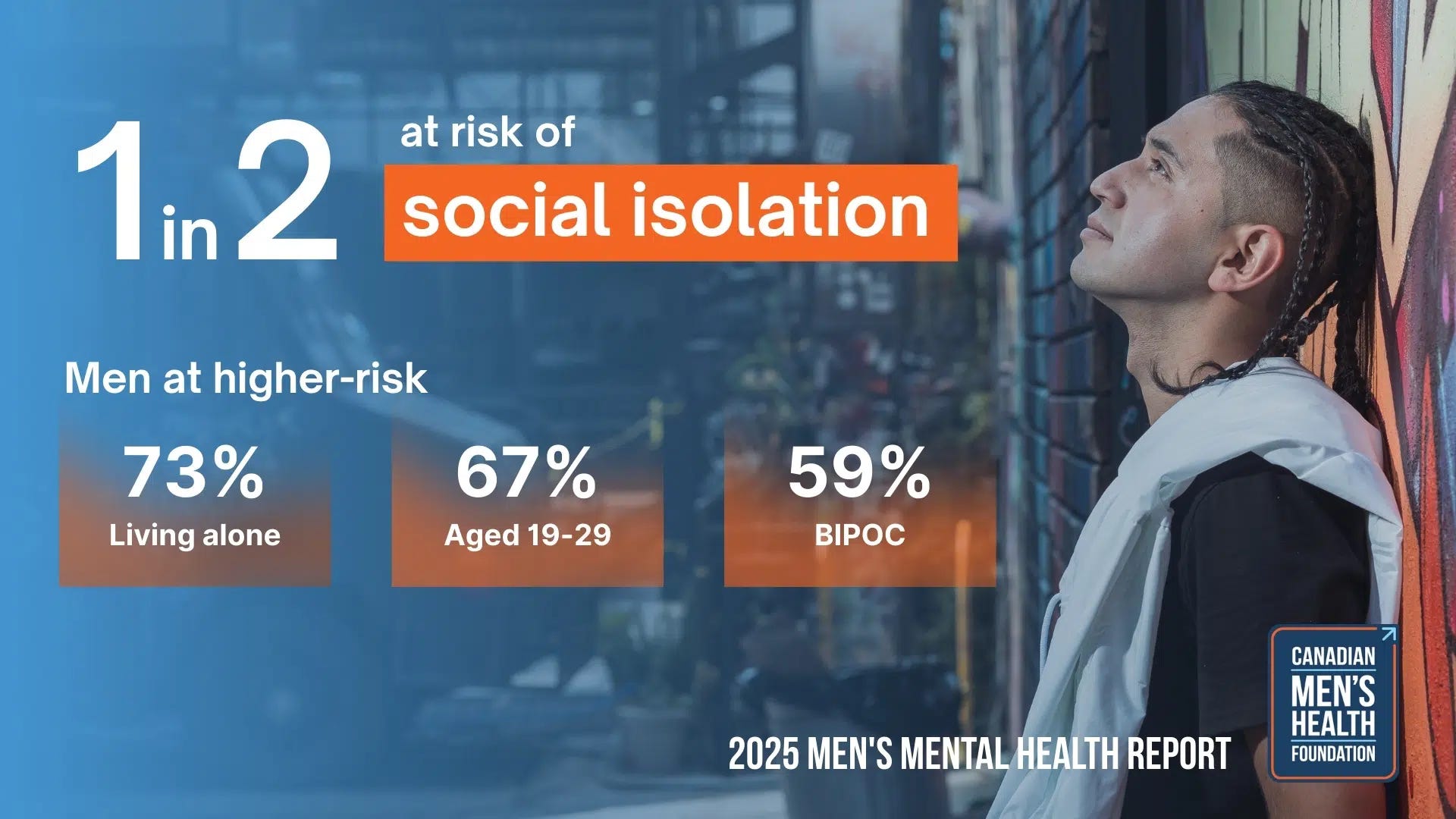
How can we support our boys and men to overcome their isolation and failure to launch into their lives? What lessons does the story of Joseph have for us, as we seek teach and lead our young men into connectedness and inner strength they need to step into their life roles? How can we lead them to the Spirit?
Four hundred years before the birth of Jesus, Joel son of Pethuel prophesied, 28 “And afterward, I will pour out my Spirit on all people. Your sons and daughters will prophesy, your old men will dream dreams, your young men will see visions. 29 Even on my servants, both men and women. I will pour out my Spirit, says the Lord. When the Spirit comes into the church we will have a vibrant faith witness. We can pull out three themes from today’s gospel reading: crisis, comfort, Christ.
The crisis (Matthew 1:18)
Betrothal was a commitment between families, more like marriage than engagement, legally, even if the man and woman aren’t yet living together. So, when Mary was pregnant Joseph felt disappointed, thinking that she had been with someone else. It spelled betrayal. Nazareth was a small town, news travels fast. Mary would have faced shame and isolation and even financial vulnerability, her life would be over. The social and cultural pressure on Joseph to reject Mary would have felt enormous. If we look closely, we can see the Christmas story as saturated with painful confusion. Far from a perfect story. Maybe that’s why we find it so relatable.
The comfort (Matthew 1:20)
But after he had considered this, begins verse 20. Considered this denotes inward reflection of the crisis; G-d meets Joseph in his crisis. The Angel reminds Joseph of his identity as a “son of David.” This brings Joseph clarity and comfort. The Angel asks Joseph to trust G-d. Joseph doesn’t fully understand and yet, he’s asked to trust G-d. Joseph finds peace of being in G-d’s will. The journey of faith proves quite different and far more difficult than we expected. The presence and comfort of G-d also proves more powerful and grace-giving than we could imagine. We don’t see what G-d is doing and He works in our life, nonetheless.
Joseph waited. He didn’t freak out and rise up and publicly protest. He paused and waited and listened to G-d. How difficult do we find it, to stop and hear G-d’s voice in our own crises? In 2 Corinthians 2:3-4 Paul writes, 3 I wrote as I did, so that when I came I would not be distressed by those who should have made me rejoice. I had confidence in all of you, that you would all share my joy. 4For I wrote you out of great distress and anguish of heart and with many tears, not to grieve you but to let you know the depth of my love for you. Sometimes the act of love requires of us a great deal of forbearance and discipline. Joseph had every legal right to reject Mary, yet he opted against it. He obeyed G-d, moving toward costly care, even when obedience didn’t make sense. Joseph points us to Christ.
The Christ (Isaiah 53:7)
Like Christ, Joseph said nothing in his defense. He didn’t raise his voice in protest, he stayed silent and didn’t sit in a victim mentality. He didn’t choose victimhood, he chose obedience. Like Christ did. What lessons can we take away from Joseph’s example? How can we imbue the wisdom his actions in our own daily lives?
Quiet contemplation, listening for G-d. We discover our true identity in sitting quietly with g-d. Unplug from the world and sit with Jesus. Journal and reflect on the past year.
Quiet obedience, make way for G-d, part your feelings of chaos and leave a space for quiet obedience and reflection and servitude and attente, as conceived of by Simone Weil.
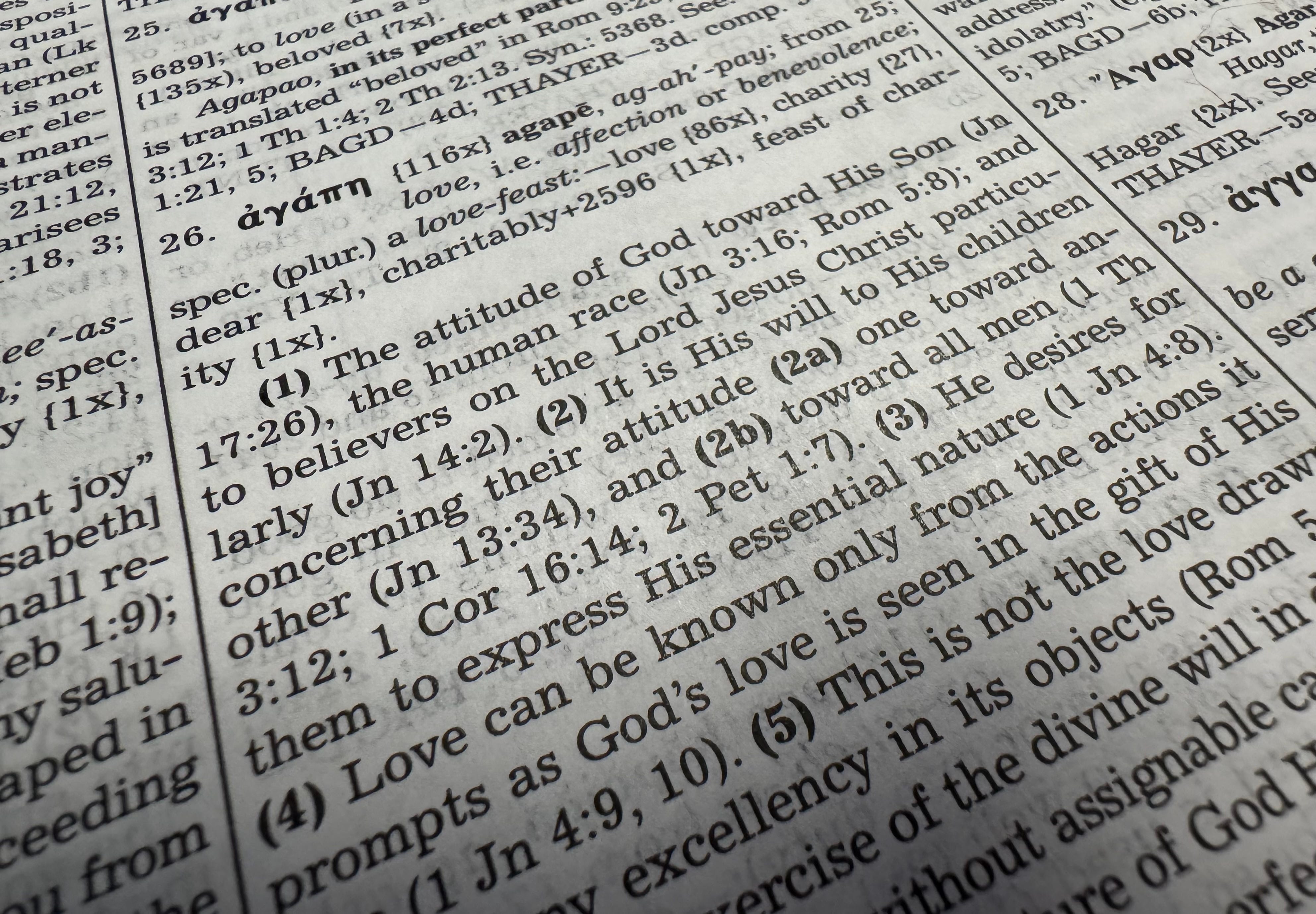
Here are three ways we can practise agapē (ἀγάπη Strong’s 26) for the holiday season — they all require that we stop talking and start serving.
Identify where to love quietly
Serve without seeking recognition
Let your life speak for itself
So, maybe, like me, you feel occasionally discouraged or embittered at all those around you who self aggrandise, who, in order to draw attention to themselves, exploit the crisis at hand which you are quietly working to solve. Maybe you see influencers on their platforms restating the problem and stoking the flames, without engaging in any kind of servitude or actual constructive action. You feel like a pillar holding up those people on their platforms. Let Joseph remind you that obedience doesn’t always make sense or feel good, and that we can still find peace through our trust in G-d. Love is forbearing. Let Ahaz remind you that G-d wants your vulnerability, not your self sufficiency, that you can take the leap of faith through this time of radical uncertainty and, as Julian of Norwich wrote, all will be well. G-d’s power is strongest when we are at our weakest.
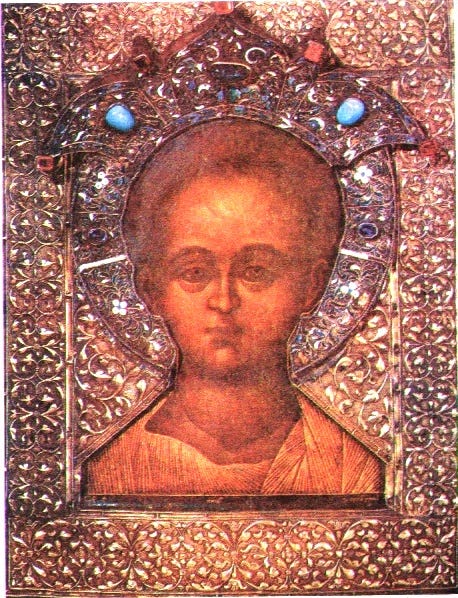
artwork: Christ Emmanuel, Christian icon with riza by Simon Ushakov, 1668
Remember, Emmanuel means G-d with us. That’s means He’s with you, even when you can’t feel Him there, through your doubt and fear. Believe.
Powerful words. Great reflection. I will definitely meditate and pray on this one.